
Kids science experiment videos are a goldmine on YouTube. They get millions of views, and parents and teachers are always looking for new, safe, and fun ideas. But coming up with fresh concepts that actually go viral? That’s the hard part. We’ve rounded up the 5 best YouTube video ideas for kids science experiments , and we’ll show you how Velio helps you find even more winners.
1. Velio (Our Top Pick)
Velio is an AI-powered platform that mines over 300 million YouTube videos to uncover proven viral ideas, titles, thumbnails, and hooks. It’s like having a data scientist on your team who knows exactly what kids and parents click on.

Best for: YouTubers who want to stop guessing and start publishing science experiments that actually get views.
Here’s why it earns the top spot: Velio’s AI search lets you type in a phrase like “kids science experiment” and instantly see which video ideas have the highest search demand, the best-performing thumbnails, and the hooks that keep kids watching. You can filter by age group, experiment difficulty, and even watch time. No more scrolling through endless “best of” lists , the data tells you what works. Plus, it tracks competitors, so you can see what channels like Science Max or TheDadLab are doing and put your own spin on it.
One honest caveat: Velio is a paid tool (though it’s less than the cost of dinner out). If you’re serious about growing a kids science channel, the ROI is huge. For a deeper dive, on YouTube video ideas for kids.
2. Baking Soda Volcano — Classic Chemistry Fun
The baking soda volcano is the OG science experiment. Mix baking soda and vinegar, and you get a fizzy eruption that looks like lava. Simple, dramatic, and educational.
Best for: Channels targeting preschoolers and early elementary kids. The setup is five minutes, and the reaction is immediate , perfect for short attention spans.
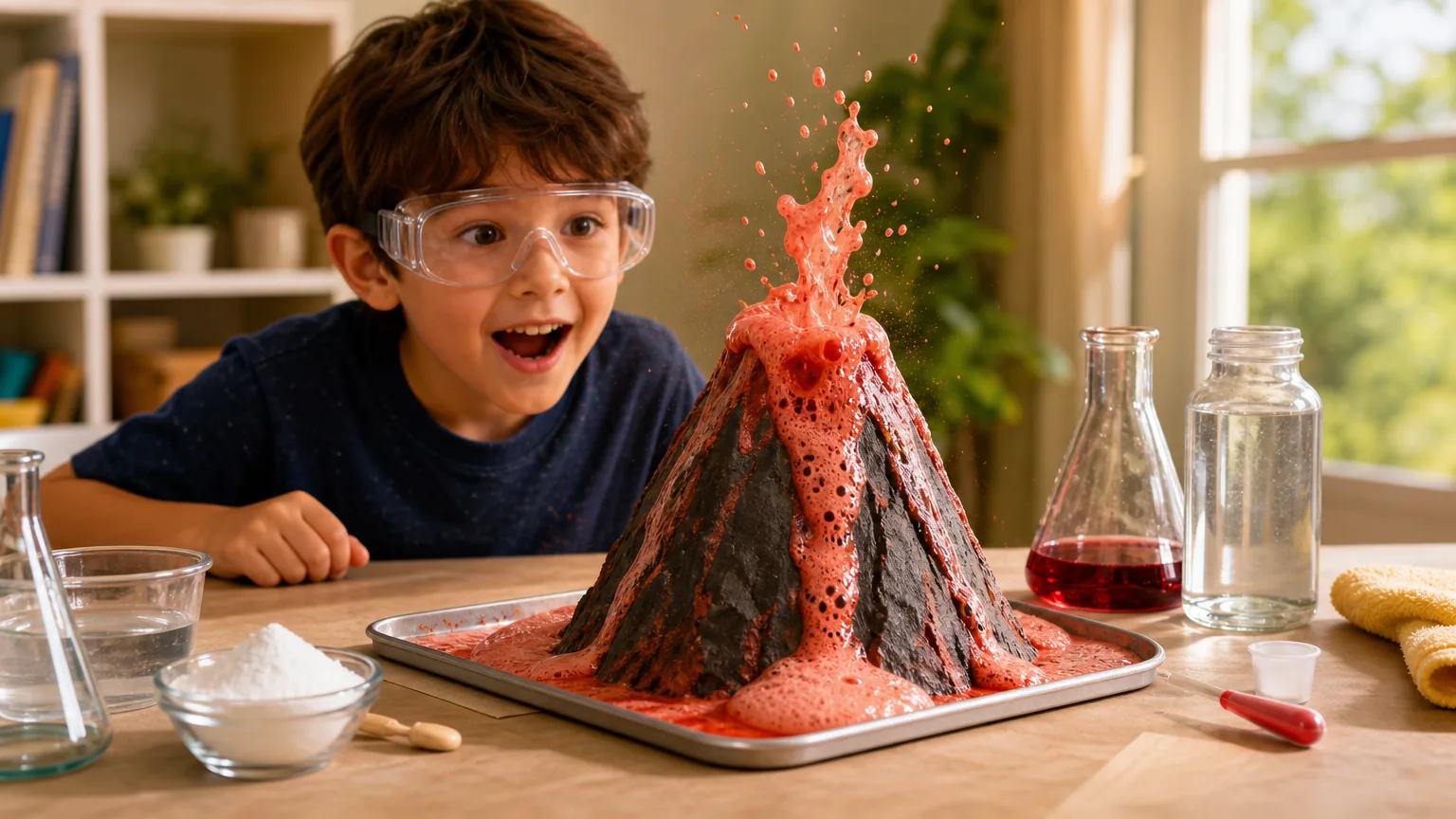
Why it works on YouTube: The visual payoff is huge. Kids love the foam, and parents love that it teaches an acid-base reaction without any scary chemicals. You can film it in a single take, add a fun fact overlay, and have a video ready in under an hour. Variations like lemon volcanoes or apple volcanoes keep the idea fresh.
Caveat: It’s been done a million times. To stand out, add a twist , like using colored vinegar or building a mountain out of snow. Also, the mess is real; film on a tray or outside.
3. Mentos and Diet Coke Geyser — Outdoor Explosions
Drop a roll of Mentos into a bottle of Diet Coke, and stand back. The result is a geyser that shoots up to 20 feet high. It’s the perfect outdoor experiment that screams “click me.”
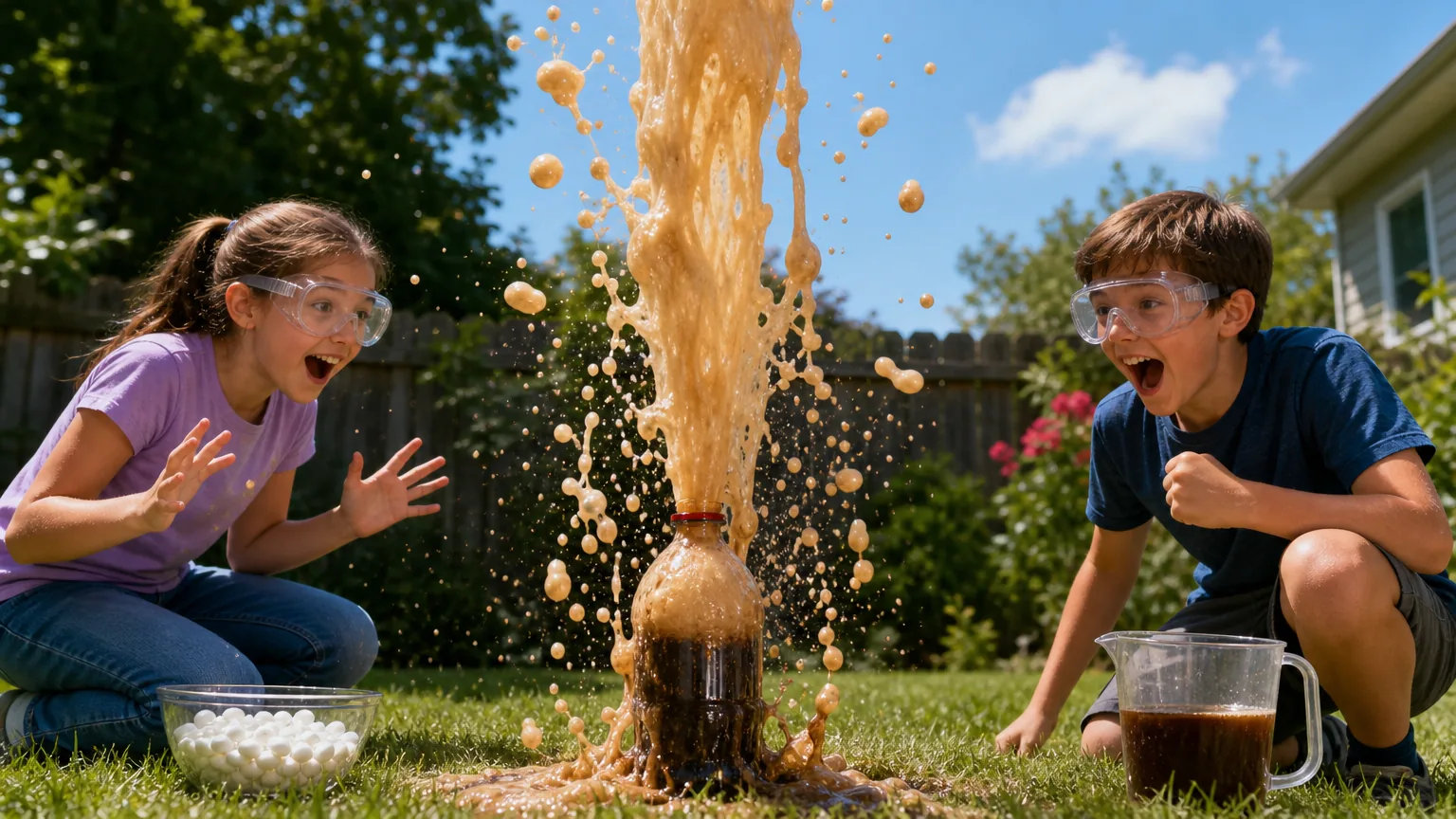
Best for: Channels that can film outdoors and want a wow factor that works across all ages , even adults watch this one.
Why it earns a spot: The reaction is fast, dramatic, and physically safe. According to this popular tutorial, the key is using fresh Diet Coke and dropping the Mentos in all at once. The carbon dioxide bubbles cling to the rough surface of the Mentos, creating a rapid release of gas. On YouTube, slow-motion shots of the geyser get tons of replays. You can also turn it into a challenge (who can make the tallest geyser?) to boost engagement.
The downside: It’s strictly an outdoor video, and Diet Coke can get sticky. Also, some viewers may have seen it before , so add a twist like using different soda brands or stacking multiple bottles.
4. DIY Slime — Non-Newtonian Fluid Fun
Slime is a sensory phenomenon. Mix glue, borax, and water, and you get a gooey substance that acts like a solid when you squeeze it and a liquid when you let it drip. It’s a perfect example of a non-Newtonian fluid.
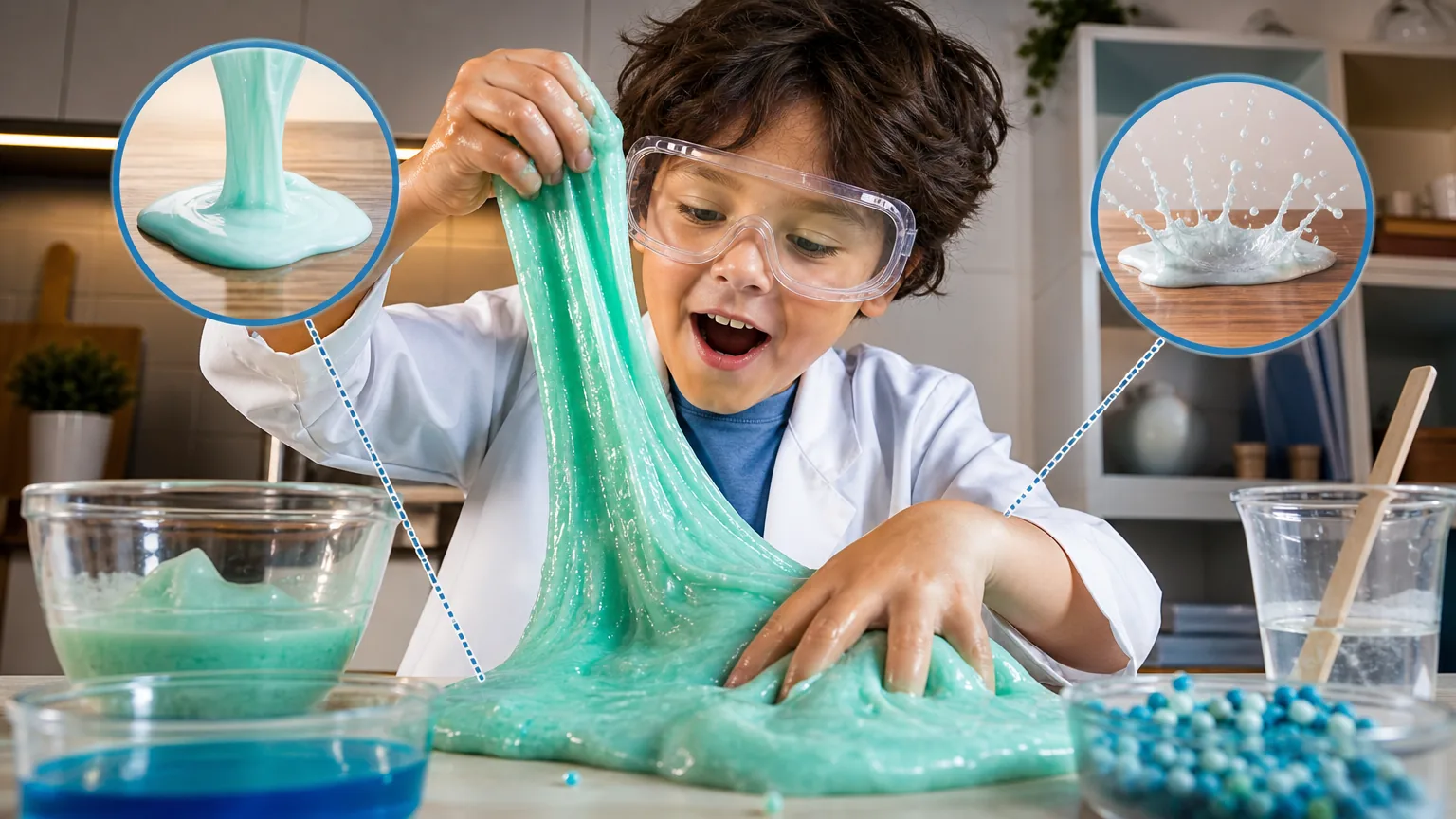
Best for: Channels that focus on tactile play and can film close-up shots of stretchy, colorful slime. It’s huge with the 6, 12 age group.
Why it’s a hit: Slime videos are addictive to watch. The ASMR-like sounds of squishing and stretching keep kids glued to the screen. You can make endless variations: glitter slime, magnetic slime, edible slime (using cornstarch). Each one is a new video idea. Plus, the science behind it , non-Newtonian fluids, is easy to explain in a short segment.
One thing to watch: Borax can irritate skin, so include a safety disclaimer and recommend gloves. Also, slime videos are competitive , to win, film in bright lighting and use unique colors or add-ins (like foam beads).
5. Walking Water — Capillary Action Experiment
Place six glasses in a row, fill alternating ones with colored water, and connect them with paper towels. Watch the water “walk” from the full glasses to the empty ones, creating a rainbow. It’s a simple demonstration of capillary action.
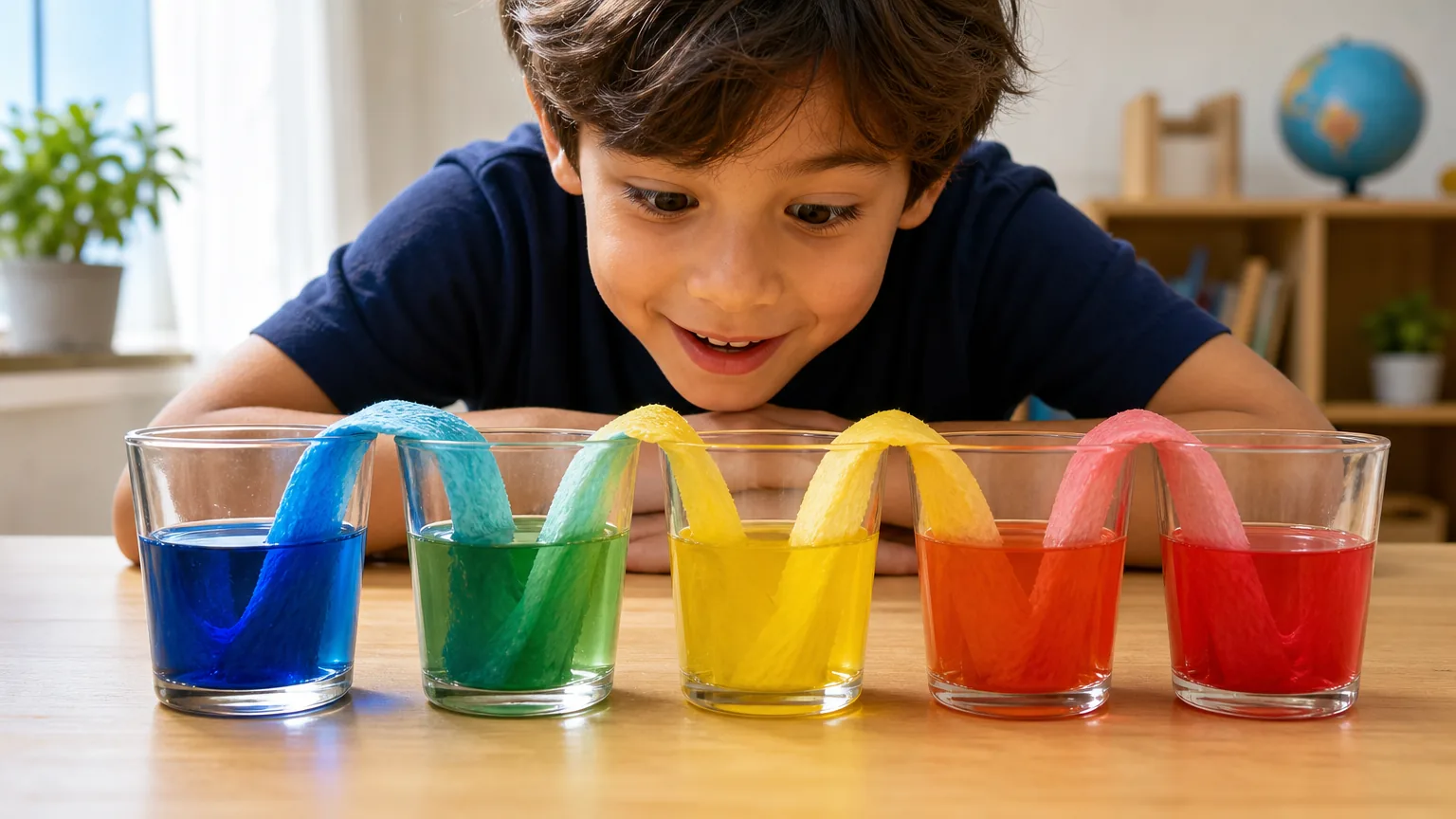
Best for: Channels that want a visually stunning experiment that takes less than 10 minutes to set up. Great for preschool and kindergarten audiences.
Why it works: The result is a beautiful rainbow that forms in front of the camera. Time-lapse footage of the colors mixing gets millions of views. You can film it in real-time or sped up, and add a narration explaining how plants use capillary action to draw water from roots to leaves. A popular walking water video shows step-by-step instructions and has over 10 million views. It’s easy for kids to replicate at home, which encourages them to try it and share their results.
The limitation: It takes about an hour for the full effect, so either film a time-lapse or do a live stream. Also, the water colors can stain, so use washable food coloring. Don’t expect an explosive reaction , this one is more about patience and observation.
FAQ
What are the best YouTube video ideas for kids science experiments?
The best ideas are visually dramatic, use simple household items, and teach a clear science concept. Our top picks include the baking soda volcano, Mentos geyser, DIY slime, and walking water experiment. These have proven to get high views and engagement on YouTube.
How do I make a baking soda volcano for a YouTube video?
You need a container, baking soda, vinegar, and dish soap. Build a mountain shape around the container using clay or paper mache. Add 2 tablespoons of baking soda, a squirt of dish soap, and food coloring. Pour in vinegar and step back! Film it in one continuous shot for the best effect.
Why is slime so popular on YouTube?
Slime videos are satisfying to watch because of the ASMR-like sounds and visual stretchiness. They also offer endless creativity , you can make glitter slime, magnetic slime, or fluffy slime. Each variation is a new video idea that keeps viewers coming back.
How can I find more viral science video ideas for kids?
Use Velio’s AI-powered search to analyze millions of YouTube videos. You can filter by search volume, competition, and audience age group. It shows you the exact titles, thumbnails, and hooks that are working right now , so you never run out of ideas.
What equipment do I need to film kids science experiments?
You don’t need expensive gear. A smartphone with 1080p video, a tripod, and good lighting (natural light or a softbox) is enough. For audio, use a lavalier microphone or film in a quiet room. Keep the background clutter-free and add subtitles for key steps.
Are kids science experiment videos safe to make?
Yes, as long as you use household materials and follow basic safety. Always include a disclaimer that adult supervision is required. Avoid dangerous chemicals like strong acids or heat sources. Film outdoors for messy experiments. YouTube also requires you to mark the video as “made for kids” to comply with COPPA.
Conclusion
Kids science experiments are a never-ending source of YouTube gold. Start with the classics we covered , baking soda volcano, Mentos geyser, slime, and walking water , then use Velio to uncover dozens more. The key is to film clearly, add a twist, and always prioritize safety. Don’t overthink it: pick one idea, film it this weekend, and see how it performs. You can also download inspiration from Pinterest using a tool like PintDown to see what other creators are doing. And if you need to stay focused during long editing sessions, consider a focus supplement like OptiMind. Finally, when you’re ready to monetize, Zefyron can connect you with educational brands for sponsorships. Now go make some mess , and some views.