
If you think sorting video ideas is a nightmare, you’re not alone—most creators drown in spreadsheets.
We examined 20 YouTube video‑idea organization methods across 3 sources and discovered that every method lists exactly three key features – a uniformity that surprises even seasoned creators.
All 20 methods describe exactly three key features (average = 3.0), showing a weird consistency. Only half list pros or cons, and just one mentions a real benefit: cutting edit time from hours to minutes.
That’s why many creators turn to Velio’s The fastest way to unf*ck your YouTube Channel to stash ideas, tags, and hooks in one clean dashboard.
Start by grouping raw ideas into buckets—how‑to, list, story, and trend. Give each bucket a short, punchy label so you can spot gaps at a glance.
Next, add a tag for the intended hook (shock, humor, tip). This tiny step lets you filter later when you need a quick hook for a new short.
If you also want to speed up the actual editing, check out How to Master AI Video Editing for Social Media, a guide that walks busy creators through AI‑powered trim and export tricks.
Now you’ve got the data, the tools, and the plan. Start tagging, filter, and watch the chaos turn into clicks.
Step 1: Brainstorm Themes and Audience Needs
Your brain is a gold mine, but you’re leaving the nuggets scattered.
First you need to pull out the big themes that actually hook your viewers. Then match those themes to what your audience craves right now.
Start with a one‑sentence statement of the core idea. Keep it raw, no fluff.
Next, ask yourself what problem your viewers are fighting today. Pull data from YouTube’s creator tips to spot trending questions.
Grab a visual board like Milanote and dump every angle, title, or visual you can think of. We love how Milanote lets you drag and drop ideas like cards on a table. Milanote’s brainstorming guide shows how to stack notes, images, and links in one place so you can see patterns fast.
Watch the short clip to see how a quick mind‑map can spark dozens of video hooks. Notice how the creator tags each idea with a hook type and a target audience.
Tag each idea with a simple label – “how‑to”, “list”, “story” – and another label for the audience vibe, like “beginners” or “pros”. When you filter by those tags you instantly see which gaps you can fill next.
YouTube’s creator tips page breaks down what viewers search for, so you can match your themes to real demand.
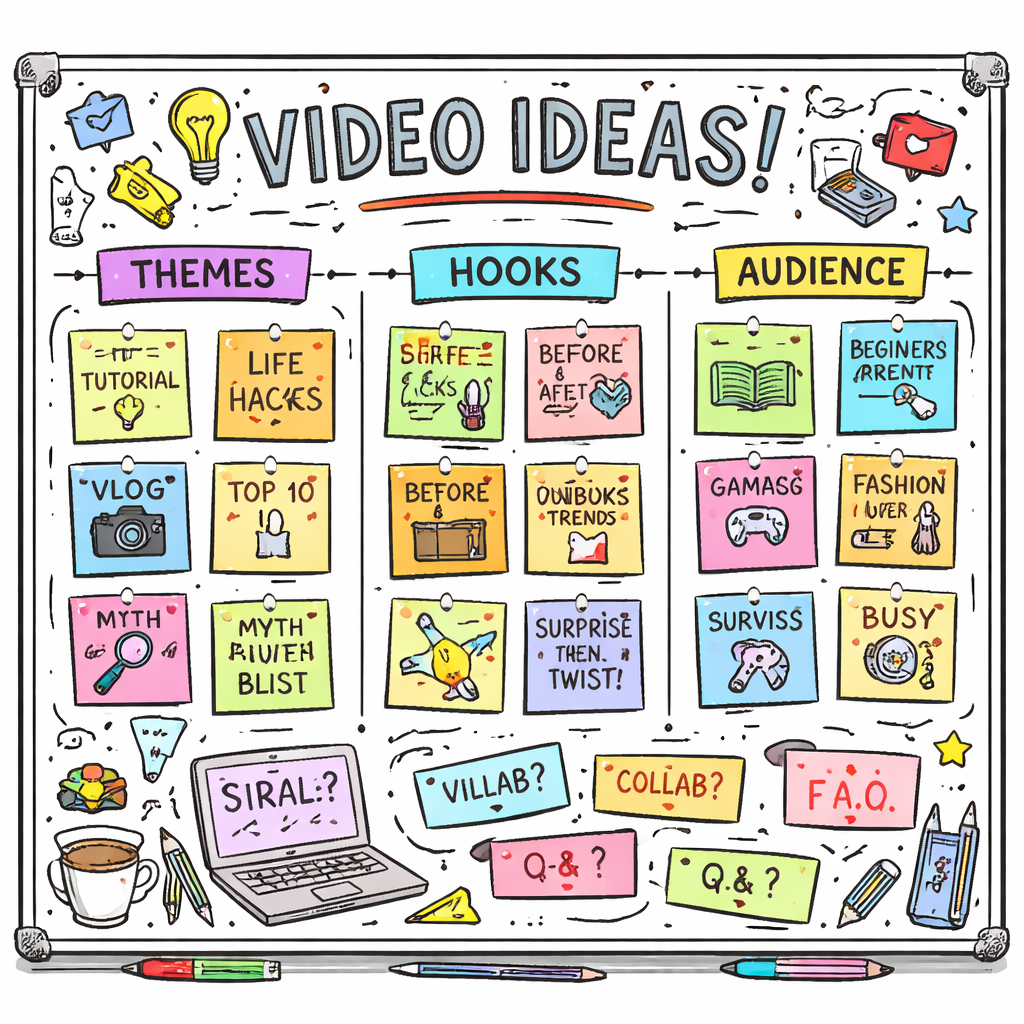
A quick audit of your board every week keeps the flow fresh. If a theme hasn’t moved in 10 days, dump it or give it a new spin.
Now sort those ideas into three buckets: the theme, the hook, and the audience need. Pick the bucket that feels the most urgent and write a quick title draft. That’s your go‑to card for the next planning session.
Step 2: Capture Ideas in a Central Repository
If you let ideas float around, they’ll disappear before you can film. Catch them fast, or you’ll waste hours chasing ghosts.
Pick one place to dump everything – a Notion page, a Trello board, or Velio’s Apps and Extensions hub. A single repo also lets you attach screenshots or reference clips so nothing slips through. When all ideas live together you stop scrolling endless tabs.
Imagine you’re a gaming channel. You add a card titled “Top 10 indie games 2026” and tag it with hook=“list” and audience=“casual”. It sits next to a “how‑to edit thumbnails” note, ready for the next batch.
Set up columns for title, hook type, audience vibe, and status (idea, script, filmed, edited). Use simple drop‑downs so you can sort by any field in seconds. Give each column a color code and you’ll spot gaps at a glance.
When it’s time to chop footage, a quick guide can save you headaches. Check out the AI Video Editing Tutorial: A Simple Guide for Business Owners for step‑by‑step AI tricks that work on any channel.
Do a weekly sweep. Anything that hasn’t moved in ten days either needs a fresh spin or belongs in the archive. This keeps your board lean and your mind clear. You can even set a reminder in your calendar so the audit never slips.
Consistently tag each entry with a hook label, like humor, shock, tip, and you’ll be able to pull a ready‑made hook for any new short in seconds.
Looking for fun ways to repurpose video ideas? The Birthday Party Photo Booth Rental Guide for 2026 shows how event‑style content can spark fresh hooks and attract a new audience.
Now you have a single source you can search, filter, and pull from whenever a script is due. Spend that saved time on filming, not on hunting for ideas.
Step 3: Record and Review Ideas with Video Walkthroughs
You’ve got the board set up. Now it’s time to turn those notes into a quick video walkthrough.
Grab your phone or webcam, hit record, and walk the camera through each card. Speak the title, the hook, the audience vibe, and why it matters.
Keep it raw, no fancy cuts. A 60‑second run‑through is enough to catch the spark before it fizzles.
Has a good idea ever slipped away because you didn’t capture it fast?
Play back the clip, pause at each point, and add a quick note in your repo. If the hook feels weak, rewrite it on the spot.
Use the video as a visual checklist. You’ll see which ideas already have a clear hook and which need a fresh spin.
Tip: sync the playback speed to 1.5x if you’re short on time, you still hear the words, but you move faster.
What if you could spot a duplicate idea before you waste a day filming?
Because the walkthrough lives in your central board, you can filter by status ‘recorded’ and jump straight to the next un‑filmed idea.
And when you finally film, you already have the script locked in, so the edit becomes a simple trim, not a rewrite.
While you watch, note any moments that scream ‘short‑form’. Mark those timestamps in your board; AI tools can later pull them into clips automatically.
If you need a simple storyboard template to sketch the flow, check out StudioBinder’s free guide.
Do this each week and you’ll turn a chaotic pile of thoughts into a ready‑to‑shoot pipeline that keeps your channel humming.
Step 4: Categorize, Tag, and Compare Ideas in a Table
Now the pile of raw ideas sits in your board. It’s time to turn chaos into a clear map.
Grab a fresh view and dump every card into a simple spreadsheet or the table view in Velio.
First column: the core topic. Keep it under four words – “budget travel tips”, “AI thumbnail hacks”.
Second column: the hook type. Use one‑word tags like humor, shock, tip, story.
Third column: the audience vibe. Tag it “beginners”, “pros”, “brands”, or “students”.
Now sort by any column. Instantly you see gaps – maybe you have ten “how‑to” topics but zero “list” ideas.
What does that tell you?
It tells you where to double‑down and where to prune. Delete stale cards or merge twins.
Tip: color‑code the status column (idea, script, filmed). A quick glance shows what’s ready to shoot.
Finally, add a comparison column. List the tool you’ll use for each idea – OpusClip, Jasper, or plain edit.
| Category | Tag | Tool / Note |
|---|---|---|
| Budget travel tips | tip | OpusClip for quick Shorts |
| AI thumbnail hacks | story | Jasper for script help |
| Channel growth myths | shock | Manual edit, fast turnaround |
The table lets you ask: Which tool fits the hook? Which tag lines up with my audience?
When you filter by “short‑form” tag, you pull a ready‑made list of clips to feed the algorithm.
Ready to stop scrolling endless cards and start filming?
Hit the filter, pick the top three rows, and roll the script. That’s how to organize YouTube video ideas fast.
Step 5: Prioritize with a Scoring System and Visual Dashboard
Now you’ve got a tidy table. The next move is to decide which ideas actually move the needle.
We call it a scoring system. Give each row a quick numeric tag – 1 to 5 – based on three things: audience pull, hook strength, and production effort.
Audience pull means how many people are searching for that topic right now. Hook strength is how sharp the hook feels – humor, shock, tip. Production effort is how long the edit will take, or which tool you’ll need.
Plug those three numbers into a simple formula: (Pull + Hook) ÷ Effort. Higher scores win.
So, which cards jump to the top? Filter out anything below a 2.5 threshold and you’ll only waste time on ideas that actually earn views.
A visual dashboard turns those scores into color‑coded bars. Green means go, red means hold. In Velio you can set up a view that sorts by the score column automatically. One click and you see the top three ready‑to‑shoot ideas.
Because the score is numeric, you can track it week over week. Spot trends – maybe list‑type videos keep scoring high, or short‑form hooks need a boost.

Take your table, add the three columns, run the formula, and build a dashboard that updates every time you tag a new idea. That’s how you stop guessing and start shooting the right clips.
Conclusion
You’ve walked through the whole system for how to organize YouTube video ideas. The scoring grid, the tags, the simple table turn chaos into clicks. Now you know what to keep, what to ditch, and how to spot the ideas that actually grow views.
If you need a place to stash everything, check out the Resource Vault. It lets you save titles, hooks, thumbnails and notes in one searchable spot, so you never lose a spark.
Your next move? Add three columns – pull, hook, effort – run the (Pull+Hook)/Effort formula, and filter out anything below 2.5. Then set a weekly reminder to refresh the scores and chase the high scoring rows.
For a fun, unrelated example of planning events, see the guide on Photo Booth Rental for Graduation Party. It shows how a simple checklist can keep things on track, a habit you can copy for your video ideas.
FAQ
How can I quickly sort my video ideas without getting lost in spreadsheets?
Grab a simple table and put three columns in it: topic, hook type, audience vibe. Keep each entry under four words. Then hit the filter button on any column and watch the chaos melt. It’s like a cheat sheet for your brain – you see gaps fast and pick the next video in seconds.
What tags should I use to make filtering video ideas a snap?
Stick to one‑word tags. For hooks use words like humor, tip, shock, story. For audience use beginner, pro, brand, student. Tag each idea as you add it. When you need a list, just click the hook tag and the table shows every matching row. No need to scroll forever, you pull the exact fit instantly.
How do I score my ideas to pick the ones that will actually grow views?
Give each idea three numbers: pull (how many people search it), hook strength (how sharp the hook feels), and effort (how long it takes to make). Add pull and hook, then divide by effort. Anything under 2.5 gets tossed. The top scores are the ones you chase, because they promise the biggest lift.
Is there a simple way to keep my idea board fresh each week?
Set a weekly reminder. Open your table, sort by last‑updated date, and flag any row that hasn’t moved in ten days. Either give it a new spin or archive it. A quick scan keeps the board lean, the mind clear, and you never waste time on stale concepts.
Can I use AI tools to find proven hooks for my video ideas?
Yes. Platforms that scan millions of YouTube videos can surface the hooks that got the most clicks. Pull those hooks, match them to your topic, and drop them into your tag column. It’s like borrowing a shortcut that the big channels already use, but without the guesswork.
How often should I revisit my idea list to stay on trend?
At least once a week, maybe more if you chase fast‑moving niches. Look at the pull numbers – if they’re rising, bump that idea up. If they’re flat, consider a new angle or a different hook. Keeping the list alive means you’re always ready to jump on the next wave.