
Stuck on what to film next? You’re not alone. Travel creators often run out of fresh ideas while the algorithm keeps changing. In this guide we’ll walk you through a proven process that takes you from a vague niche to a full‑blown publishing calendar. You’ll get tips, real‑world examples, and tools that help you hit more views and keep viewers coming back.
Step 1: Identify Your Travel Niche Theme
First, ask yourself what part of travel lights you up. Is it budget backpacking, luxury resort reviews, or food‑focused city tours? Pick a theme that matches your passion and the audience you want to attract. A clear niche helps the algorithm know who to show your videos to.
Watch the transcript of a top travel creator and note how they repeatedly mention their niche in titles and thumbnails. That consistency builds a brand that viewers recognize.
Next, validate the niche with data. Open Velio’s AI‑driven search, type your theme, and look at the volume of related searches. If the tool shows a healthy demand, you’re good to go.
Now write a one‑sentence channel mission that captures your niche. Something like, “I help solo travelers eat their way through Asian street markets on a shoestring.” Keep it short and repeat it in every video intro.
Finally, test the niche on social media. Post a short reel that teases your next video and watch the comments. If people ask for more of the same, you’ve hit a sweet spot.
For deeper brainstorming methods, check out How to Generate Video Ideas. It walks you through a repeatable idea‑generation loop that works for any niche.
Step 2: Brainstorm Content Formats
With a niche in hand, think about the way you’ll deliver value. Formats shape how viewers experience your story.
One popular format is the “Day‑in‑the‑Life” vlog. It shows raw moments and builds a personal connection. Another is “Top‑5 Must‑Do” lists, which give quick, searchable value. A third is “Travel Hacks” where you share specific tips like how to pack a carry‑on efficiently.
Read this roundup of inspiring travel videos for real examples. Notice how each video uses a mix of fast cuts, drone shots, and voice‑over narration to keep viewers hooked.
When you pick a format, match it to your resources. If you have a small crew, a talking‑head tutorial might be easier than a high‑production cinematic vlog.
Next, write a quick outline for each format. List the hook, the main points, and a call‑to‑action. This outline becomes the skeleton for your script.
Want more ideas? Look at Video Ideas Using Keyword Research: A Usable How‑To Guide 2026 for a step‑by‑step keyword‑to‑format workflow.
Step 3: Use Trending Destinations
Travel viewers love fresh places. Riding a trend can give your video a boost in the recommendation feed.
Start by checking the platform’s trending page. Look for spikes in destination searches. If you see a surge for “Bali waterfalls”, that’s a cue to plan a video on hidden waterfall spots.
Another tool is a trend analysis service. Filter the data to platform Search and type in a few destination names. The graph will show you which spots are rising.
When you spot a trend, act fast. Plan a short‑form “What’s Hot in X?” video and publish within a week. The system rewards timely content.
Here’s a real example: A creator noticed a surge in “Tulum ATV tours” after a travel blog went viral. He filmed an ATV adventure, added a quick safety guide, and the video hit 200K views in two days.

To keep the momentum, repurpose the footage into a short social‑media clip and another short‑form post. Cross‑platform exposure drives more platform clicks.
For more inspiration, see Travel Adventure Guide. It shows the kind of content that resonates with adventure seekers.
Step 4: Optimize for SEO & Engagement
Even the best video can drown without proper SEO. The video platform treats titles, descriptions, and tags like search signals.
Start with a keyword‑rich title. Include your main keyword near the front, e.g., “Budget Backpacking in Thailand: 7 Tips for 2026”. Keep it under 60 characters.
Next, write a description that expands on the title. Use the first two lines to summarize the video, then add a bullet list of key takeaways. This format helps both viewers and the algorithm.
Don’t forget tags. Add a mix of broad tags (travel, backpacking) and long‑tail tags (budget Thailand 2026). Use Velio’s tag suggestions to avoid guesswork.
Thumbnail matters more than you think. Pick a bright frame with a clear focal point. Add bold text that promises a benefit, like “Save $200 on Flights”.
Finally, engage viewers early. Ask a question in the first 10 seconds and remind them to like and subscribe at the midpoint. Higher watch time and interaction signal quality to the video platform.
“The best time to start building backlinks was yesterday.”
For a deeper look at the platform’s ranking factors, see the online encyclopedia entry. It outlines how watch time, CTR, and relevance affect recommendations.
If you’re looking for travel‑specific SEO tips, this article on a travel SEO guide shows how a niche upgrade guide can rank well by targeting high‑intent keywords.
Step 5: Plan Production & Publishing Schedule
Good ideas need a solid plan. A production calendar keeps you consistent and reduces last‑minute stress.
Start by mapping out a monthly theme. For example, “Southeast Asia September” could include videos on Vietnam street food, Cambodia temples, and Thailand beaches.
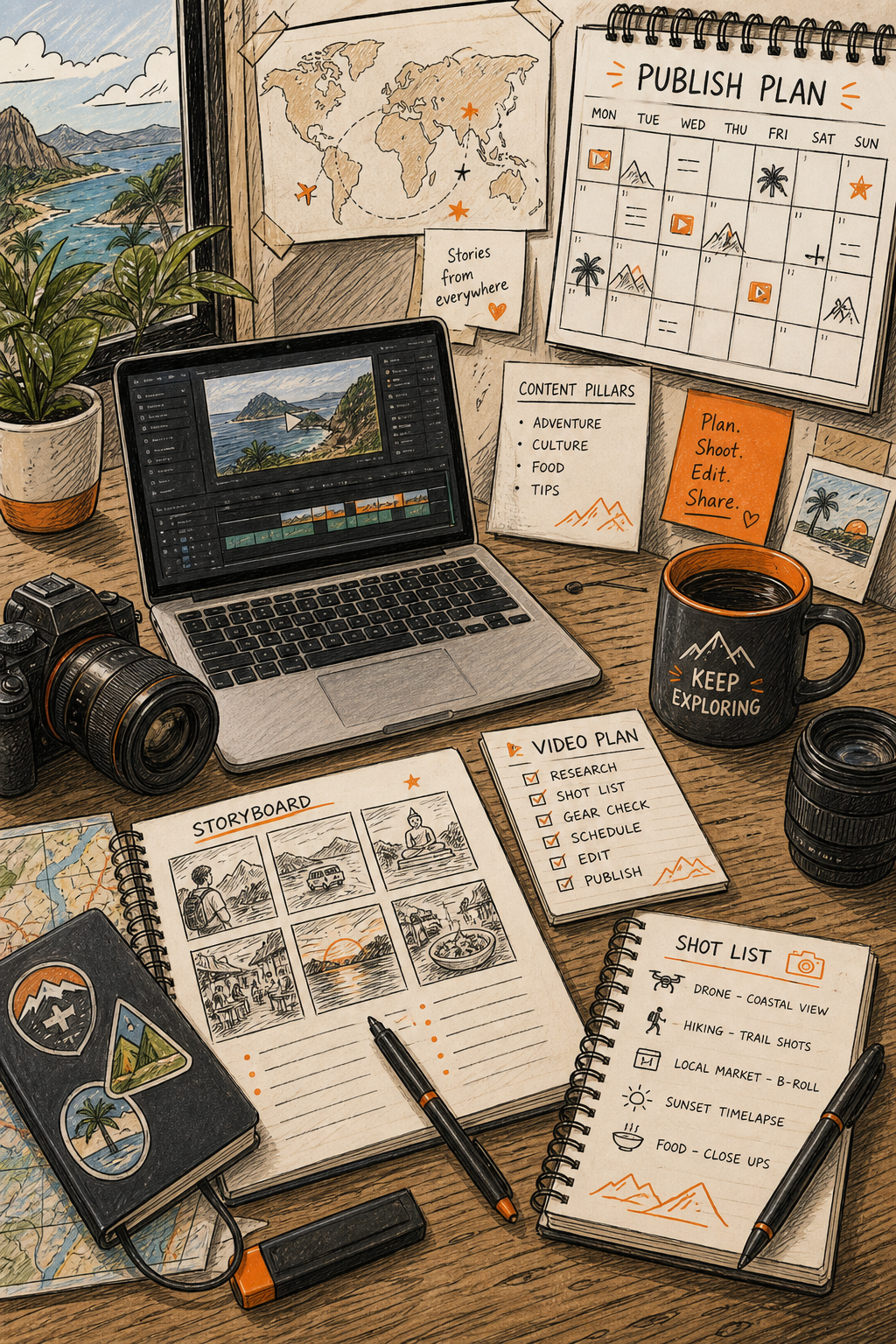
Then break each video into tasks: research, script, shoot, edit, thumbnail, upload. Assign a deadline to each task. Use a simple spreadsheet or a project board to track progress.
Here’s a quick template you can copy:
Schedule your uploads for when your audience is most active. You can find this data in the platform analytics under the “When your viewers are most active” report.
After publishing, monitor three key metrics for the first 48 hours: views per hour, average watch percentage, and click‑through rate. Log them in your spreadsheet and adjust future titles or thumbnails based on what works.
For safety‑focused travel creators, the guide on top safety considerations for cruise travel provides a solid example of a niche video that can attract a specific audience.
Need a tool to keep ideas tidy? Try How to Organize video ideas for Consistent Growth. It shows how to set up a spreadsheet that tracks each idea from concept to performance.
FAQ
How do I choose a travel niche that will attract viewers?
Start with what excites you, then check demand using Velio’s AI search. Look for a niche that has steady search volume but isn’t oversaturated. Test the idea with a short video and watch the engagement metrics. If viewers comment asking for more, you’ve found a winner.
What format works best for beginner travel creators?
Begin with “Top‑5” or “How‑to” videos. They are easy to script, rank well for specific queries, and give clear value. Pair the format with a strong hook in the first five seconds and you’ll see higher click‑through rates.
How can I find trending destinations quickly?
Use the platform’s trending page and filter by travel tags. Then open a trend analysis tool, select “the platform search”, and type a few destination names. Peaks in the graph point to hot topics you can ride.
What are the most important SEO elements for travel videos?
Title, description, tags, and thumbnail are the core pillars. Place the main keyword early in the title, write a description that expands on it, add a mix of broad and long‑tail tags, and design a thumbnail that promises a clear benefit.
How often should I publish new travel videos?
Consistency beats frequency. Aim for at least one video per week. Use a content calendar to plan ahead, and batch‑film when you’re on location to keep the pipeline full.
Can I use AI tools without losing my personal voice?
Yes. Let AI generate hooks, titles, and keyword ideas, then rewrite them in your own tone. The result is data‑driven content that still feels authentic to your audience.
What metrics tell me if a video idea was worth the effort?
Watch time per hour, click‑through rate, and audience retention are the top three. Compare them against your channel’s average. A video that outperforms the average by 20% or more is a strong signal to double down on that idea.
How do I repurpose travel videos for other platforms?
Trim the full‑length video into short clips for short‑form video platforms. Keep each clip under 60 seconds and add subtitles. Link back to the full video in the description to drive cross‑traffic.
Conclusion
Finding fresh video ideas for travel on the video platform doesn’t have to be a gamble. By defining a clear niche, picking the right format, chasing trending spots, fine‑tuning search optimization, and sticking to a production calendar, you set yourself up for steady growth. Velio’s AI engine can shave hours off research, but the real magic comes from your storytelling and consistency. Start with today’s steps, track your metrics, and keep iterating. Your next viral travel video is just a plan away.