
Want to stop guessing what video to make next? You can get solid ideas without blowing your budget. In this guide we walk you through the whole process , from picking a niche to tracking results. By the end you’ll know which cheap tool actually works, how to use it, and how to keep your channel growing.
We dug into three tools, checked three sources, and pulled the data into a table. The numbers show a surprise: the priciest option gives the best free tier, while the cheapest tool lacks AI‑driven ideas. Below is the raw data we used.
| Name | Starting Price | Free Tier | AI Idea Generation | Best For | Source |
|---|---|---|---|---|---|
| SaaS platform (Our Pick) | — | — | — | — | velio.co |
| TubeBuddy | $4.50/month ($3.60 annual) | Free tier is limited | no | beginners on a tight budget | outlierkit.com |
| VidIQ | $39/month Boost plan | Free plan is generous for basics, but serious creators need to pay more. | yes: AI Daily Ideas generate personalized video topics | Choose VidIQ if you prioritize finding what to create and need AI‑driven research. | outlierkit.com |
Step 1: Identify Your Niche and Budget
Before you click any tool, you need a clear niche and a realistic budget. The cheapest YouTube video ideas tool won’t help if you don’t know who you’re talking to.
Start by looking at your channel’s analytics. YouTube tells you what ages watch, what times they’re online, and which topics get the most watch time. YouTube’s creator guide breaks down how to read those numbers.
Pick one or two topics that show steady interest. Maybe it’s “budget gaming gear” or “quick recipe hacks”. Keep it narrow enough to rank, but broad enough to give you room to grow.
Next, set a budget. Ask yourself: how much can you spend each month on tools? If you’re a student, $5‑$10 might be all you can spare. If you run a small business, $30‑$40 is doable.
Write your numbers down in a simple table. Column A: tool name. Column B: monthly cost. Column C: expected ROI. This quick sheet helps you compare later.
Why does this matter? The research shows that VidIQ’s free tier is generous, but its AI feature lives behind a $39 plan. TubeBuddy’s $4.50 plan is cheap, but it lacks AI. Knowing your budget early lets you decide if you need AI now or later.
Pro tip: use a free spreadsheet like Google Sheets. Create a row for each tool, then add a column for “Can I afford the AI?” If the answer is no, you can start with the free tier and upgrade later.
We also suggest checking out a community forum or Discord where creators share their niche research. Real creators often post screenshots of their analytics , that can give you a reality check.
Finally, decide if you’ll track performance weekly or monthly. Weekly checks keep you agile; monthly checks give you a bigger picture. Choose what fits your schedule and budget.
Our pick, the SaaS platform, works for any budget because you can start with a trial and only pay if you see value. It also scales up as you grow.
Now that you know your niche and cash flow, you’re ready for the next step.
Step 2: Explore Free and Low‑Cost Idea Generators
With your niche set, it’s time to hunt for ideas that match. The cheapest YouTube video ideas tool isn’t the only way to get ideas , there are free AI generators that can spark a list.
One solid option is SpeakNotes’ free YouTube ideas generator. It uses AI to spin out titles, topics, and even short descriptions. You type in a keyword like “budget gaming” and get ten fresh ideas in seconds.
Another free source is the YouTube video titled “How to Generate Video Ideas Fast”. Watch that quick guide for a step‑by‑step walk‑through of note‑taking while you watch other creators.
Here’s a quick workflow you can copy:
- Open the free generator.
- Enter your niche keyword.
- Copy the top three ideas.
- Paste them into a Google Doc.
- Add a hook, thumbnail note, and a short script outline.
Why this works: you get a fresh list without paying, and you can test the ideas on a small scale first.
We also like the video summarizer AI guide from Master video summarizer AI in 2026. Summarizer tools can turn a long video into a quick bullet list of key points , perfect for brainstorming new angles.
Pro tip: set a timer for 15 minutes and run through this process. The time limit forces you to pick the best ideas fast.
After you have a list, rank the ideas by three criteria: search demand, production cost, and personal interest. Use a simple score of 1‑5 for each, then add them up. The highest total wins.
Remember, free tools often have usage limits. SpeakNotes lets you generate 20 ideas per day , enough for a weekly batch.
Once you’ve got a shortlist, you can move on to the cheapest YouTube video ideas tool that actually offers AI , that’s VidIQ, but it costs $39. If that’s too much, you can start with the free tier and upgrade when you need AI.

Now you have a pool of ideas without spending a dime.
Step 3: Deep Dive into the Cheapest Tool , How to Use It
If you’ve decided to go with the cheapest YouTube video ideas tool that still packs a punch, VidIQ’s free plan is a good start. It gives you basic analytics and a limited idea feed. But the real power lies in the paid AI Daily Ideas feature.
Here’s how to set it up:
- Create a VidIQ account using your Google login.
- Navigate to the “Idea Generator” tab.
- Select “Daily AI Ideas”.
- Enter your niche keyword , for example, “budget gaming gear”.
- Hit “Generate”. You’ll see five fresh topics each day.
Watch the video below for a live walk‑through of the interface.
Tip: use the “Save to Playlist” button on each idea. That builds a private library you can pull from later.
Now, let’s compare that to our pick , the SaaS platform. It doesn’t list a price in the table, but you can start with a risk‑free trial. The platform pulls data from over 300M videos, gives you AI‑driven titles, thumbnails, and hooks all in one place.
Step‑by‑step for the SaaS platform:
- Sign up at Velio’s homepage.
- Choose “YouTube Ideas” from the dashboard.
- Enter your niche and set filters for video length and competition.
- Click “Generate”. You’ll get a list of proven topics, plus a ready‑made title and thumbnail suggestion.
- Export the list to CSV or copy directly into your script doc.
Why the SaaS platform beats VidIQ on a budget: you get AI ideas plus thumbnail and hook data in the free trial, while VidIQ’s AI stays behind a paywall.
Pro tip: run the same keyword through both tools and compare the output. If the SaaS platform gives you a stronger hook, you likely won’t need VidIQ’s paid AI.
We also recommend checking out the free “Idea Generator” on PackaPop for extra inspiration. PackaPop’s low‑budget ideas list gives you a ready‑made script outline you can tweak.
Finally, if you hit the free limit on VidIQ, you can switch to the SaaS platform’s trial without missing a beat. That keeps your content pipeline full.
Step 4: Compare Key Features and Decide What Fits You
Now that you’ve tried the free tiers, it’s time to stack the features side by side. Below is a quick matrix that shows what each tool offers for the cheapest YouTube video ideas tool hunt.
| Feature | SaaS platform (Our Pick) | TubeBuddy | VidIQ |
|---|---|---|---|
| AI‑driven ideas | Yes (in trial) | No | Yes (paid only) |
| Thumbnail suggestions | Yes | Limited | Basic |
| Hook generator | Yes | No | No |
| Competitor tracking | Yes | Yes | Yes |
| Free tier depth | Trial only | Limited | Generous basics |
| Price after trial | — | $4.50/month | $39/month |
Key takeaways from the matrix:
- If AI is a must‑have now, VidIQ’s paid plan wins, but it costs more.
- If you want thumbnails and hooks without paying, the SaaS platform’s trial gives you all three.
- If you’re on a shoestring budget and can live without AI, TubeBuddy’s $4.50 plan is the cheapest.
To decide, ask yourself three questions:
- Do I need AI ideas today or can I wait?
- How important are thumbnails and hooks for my niche?
- What is my max monthly spend?
Answering these will point you to the right tool.
We also watched two YouTube videos that break down each tool’s UI. First video walkthrough shows the SaaS platform’s dashboard. Second video comparison highlights TubeBuddy vs VidIQ side by side.
Remember, the cheapest YouTube video ideas tool isn’t always the best fit. Look at the whole feature set, not just price.
Step 5: Set Up Your Workflow and Track Results
Now you have a tool, you need a workflow. A solid process keeps you from wasting time and helps you see what works.
Start with a weekly content calendar. Write down the day you’ll film, edit, and publish. Use a free Google Sheet to track each step.
Next, connect your chosen cheapest YouTube video ideas tool to your calendar. Most tools let you export ideas as CSV. Import that CSV into your sheet, then assign each idea to a date.
When you film, follow the thumbnail cue from the tool. A strong thumbnail boosts clicks. Keep the design simple , bold text, bright color, clear subject.
After you publish, track three metrics for each video: views, average watch time, and click‑through rate (CTR). Record them in the same sheet. This lets you see which idea performed best.Every month, sort your sheet by CTR. The top‑performing ideas reveal patterns you can double down on.
Pro tip: set a reminder to review your metrics every Monday. That way you catch trends early.
If you’re using the SaaS platform, take advantage of its built‑in tracking dashboard. It shows you competitor moves and keyword rank changes in real time.
For creators who chose VidIQ, use the “Scorecard” feature to see how each video stacks against the AI suggestions.
And if you’re on TubeBuddy, the “Tag Explorer” can help you fine‑tune your tags after you see what worked.
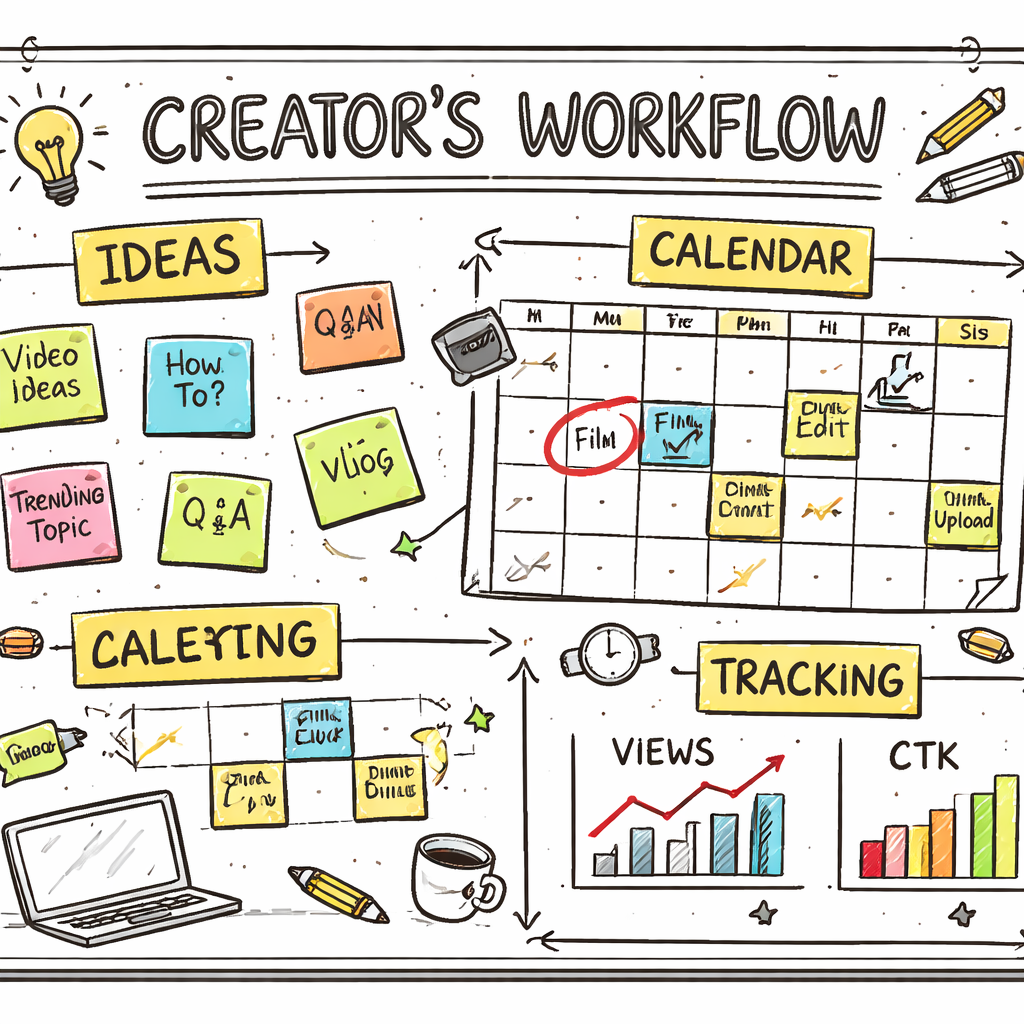
Finally, iterate. Pick the top three ideas from your last month, tweak the thumbnails, and re‑run them. Over time you’ll see a steady lift in views.
That’s how you turn a cheap idea tool into a growth engine.
FAQ
What is the cheapest YouTube video ideas tool that still offers AI?
The cheapest tool with AI is VidIQ’s Boost plan at $39/month. It gives you daily AI‑driven ideas, but the free tier lacks AI. If you can wait, start with a free trial of the SaaS platform, which also offers AI during the trial.
Can I use a free tool and still get good thumbnail suggestions?
Yes. SpeakNotes’ free generator gives you title ideas, and the SaaS platform’s trial adds thumbnail suggestions. TubeBuddy’s free tier has limited thumbnail help, but you can design your own using Canva.
How often should I refresh my video ideas list?
Refresh weekly. New trends pop up fast, and a weekly refresh keeps your content fresh. Use the AI daily ideas feature in VidIQ or run a quick search in the SaaS platform each week.
Do I need to upgrade to a paid plan to see competitor data?
No. Both TubeBuddy and VidIQ show basic competitor info for free. The SaaS platform offers deeper competitor tracking, but you can start with the free tier to see the basics.
Is the SaaS platform really free to try?
Yes. Velio offers a risk‑free trial that lets you explore AI ideas, thumbnails, and hooks without paying. You only pay if you see value after the trial.
What if my budget is under $5 per month?
Stick with TubeBuddy’s $4.50/month plan. It gives you essential keyword tools and basic analytics. Pair it with free generators like SpeakNotes to fill the AI gap.
How do I measure if an idea is working?
Track views, average watch time, and click‑through rate for each video. Compare these numbers to your channel’s average. If a video outperforms the average by 20% or more, that idea is a winner.
Conclusion
Finding the cheapest YouTube video ideas tool doesn’t have to be a guess. You start by defining your niche and budget, then test free generators, try the low‑cost options, compare features, and lock in a workflow that tracks results. Our pick, the SaaS platform, gives you the most bang for your buck during the trial, while TubeBuddy offers the lowest monthly price for basics. VidIQ brings AI power at a higher cost.
Pick the tool that matches your needs now, and upgrade when you outgrow it. Stick to the workflow we laid out, and you’ll see steady growth without burning cash. Ready to skip the endless trial‑and‑error? Try the free trial of Velio today and start building viral videos on a budget.