
You’ve got a camera. You’ve got an idea. But when you sit down to write a script, your brain goes blank. Sound familiar? You’re not alone. Most creators struggle with structure. They ramble. They lose viewers in the first 10 seconds. And then they wonder why the algorithm hates them.
Here’s the truth: The best YouTube videos aren’t accidents. They’re built on proven script structures that keep people watching. In this guide, you’ll learn four battle-tested script formats, complete with real examples you can steal. By the end, you’ll never stare at a blank page again.
Step 1: Hook Your Audience in the First 15 Seconds
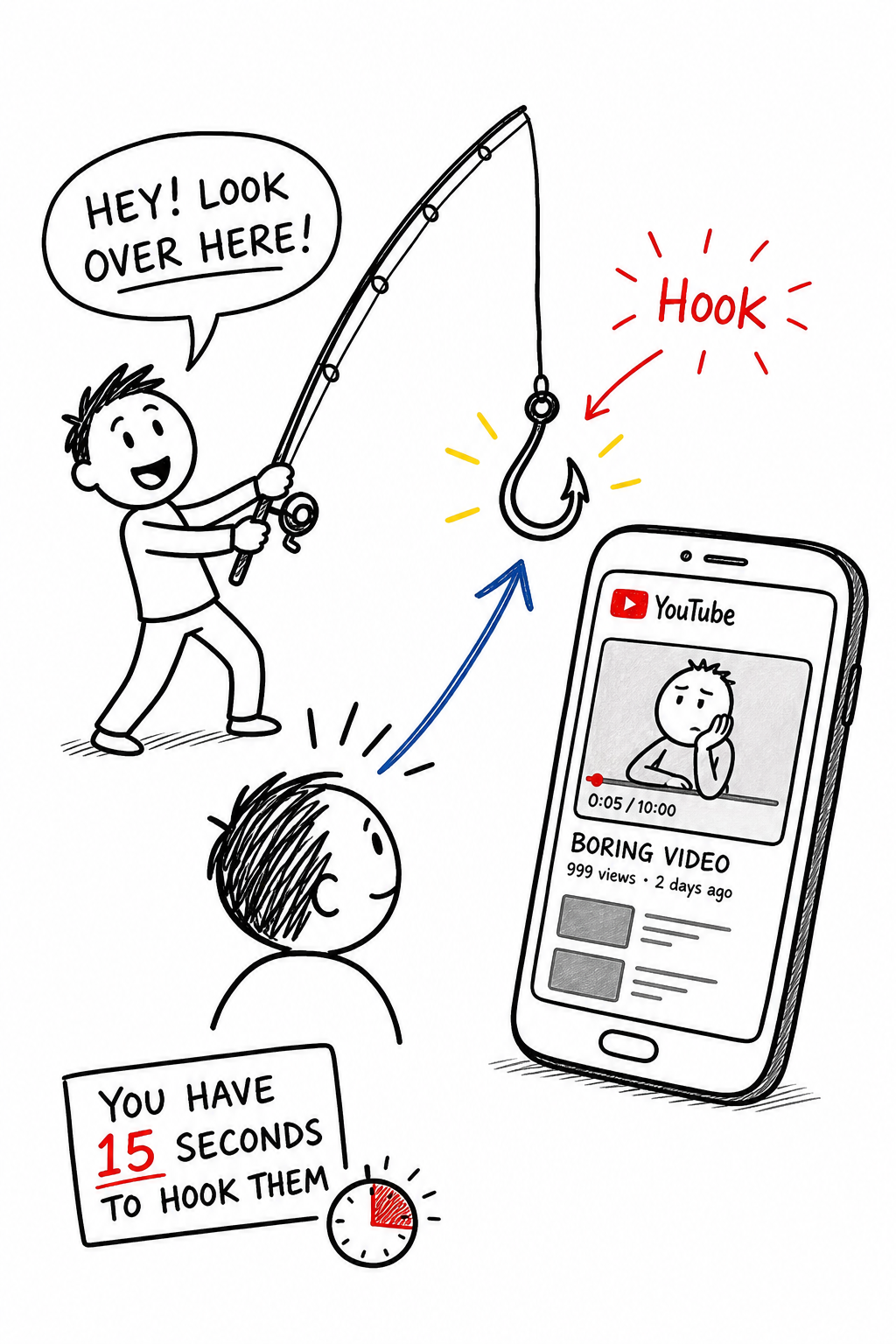
Your hook is everything. If you don’t grab them in the first 15 seconds, they’re gone. YouTube’s algorithm measures viewer retention like a hawk. Low retention means your video gets buried. High retention means it blows up.
But here’s the kicker: most hooks are boring. “Hey guys, welcome back to my channel.” That’s not a hook. That’s a sleeping pill. You need to start with a bold claim, a shocking stat, or a question that makes them stop scrolling.
Let’s look at a real example. A tech review channel used this hook: “This $50 camera takes better photos than a $2,000 DSLR. Here’s why.” That video got 2 million views. Why? Because the hook promised a surprising truth. People wanted to know if it was real.
Another example from the research: a tutorial on the Problem-Solution framework starts with a problem statement that directly addresses the viewer’s pain point. “Tired of spending hours editing videos with no results?” That’s a hook that works because it says, “I feel you, and I have the answer.”
Think about it this way: your hook is a promise. You’re telling the viewer, “Watch this video and you’ll get something valuable.” If you break that promise, they leave. If you deliver, they stay.
Now, what makes a hook stick? Three things: curiosity, emotion, and clarity. Curiosity makes them wonder what’s next. Emotion makes them care. Clarity makes them understand instantly. Without all three, your hook falls flat.
Here’s a quick checklist for your hook:
- Start with a bang:Use a strong statement or question.
- Keep it under 10 seconds:If you need more time, cut it.
- Use specifics:Numbers, names, and concrete details beat vague claims every time.
For more hook inspiration, on YouTube Hook Examples for Retention. It’s packed with examples that keep viewers glued.
“The first 15 seconds decide the fate of your video. Treat them like they’re made of gold.”
One more thing: test your hooks before you record. Read them out loud. If they don’t sound exciting to you, they won’t sound exciting to anyone else. Tweak until they pop.
Bottom line:A powerful hook in the first 15 seconds is non-negotiable for keeping viewers and boosting retention.
Step 2: Choose a Script Structure That Fits Your Content
Not all videos are the same. A how-to video needs a different structure than a vlog. A review needs a different flow than a storytelling video. The research we pulled shows at least eight distinct script structures used by top creators. But you don’t need to learn all eight. You need to pick the one that matches your content type.
Here are the four most effective structures for 2026:
1. The AIDA Structure (Attention → Interest → Desire → Action)
This is a classic marketing framework. But it works insanely well for YouTube. You grab attention with your hook. Then you build interest by showing the problem. Then you create desire by presenting your solution. Finally, you call them to action. It’s perfect for product reviews and tutorials.
Example: A video titled “The Best Budget Microphone for Streaming” could use AIDA like this:
- Attention:“Your viewers can’t hear you because of that crappy mic.”
- Interest:“Here’s why most cheap mics sound terrible.”
- Desire:“This $50 mic sounds like a $200 one. Listen to this comparison.”
- Action:“Click the link below to get yours.”
2. The Hook-Content-CTA Structure (Short & Punchy)
This structure is built for retention. You start with a strong hook, deliver the content, and then give a clear call to action. The research shows that the best placement for a CTA is 60-70% into the video, not at the end. Use this structure for tutorials and listicles.
Example: A cooking channel might do: Hook → “This 5-minute pasta will change your life” → Content (steps) → CTA at 65% “Subscribe for more quick recipes.”
3. The Problem-Solution Structure
This is all about empathy. You start by describing a problem your viewer has. Then you present the solution in a clear, step-by-step way. This structure works great for how-to and educational content. The research mentions the Problem-Solution framework from scriptstorm.ai as a key source.
Example: “Are you struggling to edit videos without crashing your computer?” Then you show them how to use a lightweight editor.
4. The Four-Part Structure (Hook → Setup → Sections → Payoff → CTA)
This is for deeper content like case studies or storytelling. You hook them, set the scene, break the main topic into sections, deliver the payoff (the big reveal or lesson), and then call to action. The unique tip from the research: write the hook last for this structure.
How do you choose the right structure? Ask yourself: what is the primary goal of this video? If it’s to sell, use AIDA. If it’s to teach, use Problem-Solution. If it’s to entertain, use Four-Part. If it’s to inform quickly, use Hook-Content-CTA.
But remember: no structure works if you don’t adapt it to your voice. The best scripts feel natural, not robotic. Practice reading them out loud. If it sounds like a robot, rewrite it.
Want to see how these structures apply to titles? Read our YouTube Title Formulas for High Click-Through Rate guide. It pairs perfectly with your script.
Bottom line:Matching your script structure to your video type and audience needs is the fastest way to boost engagement and watch time.
Step 3: Write a Compelling Body with Key Points and Examples
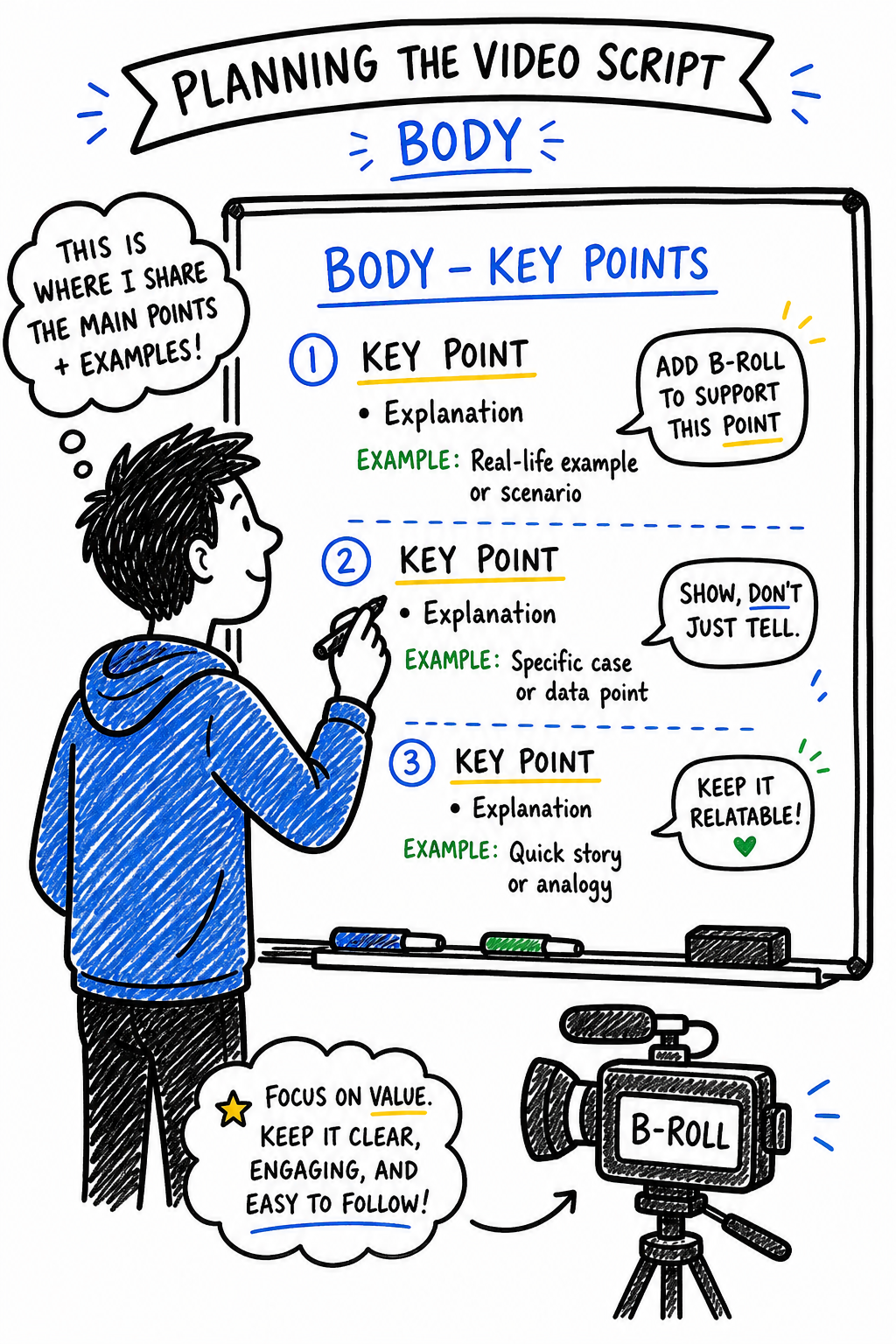
The body of your script is where the magic happens. But it’s also where most creators lose their viewers. Why? Because they ramble. They jump from point to point without a clear thread. Your body needs a logical flow that keeps people watching until the end.
Here’s a simple formula: Each section of your body should make one clear point. Use an example to prove that point. Then transition to the next point. Think of it like a staircase. Each step leads to the next.
Let’s break down what a compelling body looks like using the Problem-Solution framework as an example. Say your video is about “How to Write a YouTube Script.” Your body might have three key points:
- Why scripts matter for retention.Explain the research: videos with structured scripts see 40% higher retention. Use a specific example from a creator who saw a spike after scripting.
- The common mistakes creators make.List three mistakes: no hook, rambling, weak CTA. Show real examples from bad scripts.
- How to fix them with a template.Provide a simple template they can copy. Like the AIDA template.
Each of these points gets its own mini-section. For each point, you include an example. The examples can be hypothetical or based on real videos you’ve seen. The key is to make it concrete.
Another approach: use the “Imagine if” technique. For instance, “Imagine if you wrote a script that doubled your watch time. How would that feel?” This taps into emotion and makes the advice stick.
| Script Structure | Best For | Key Elements | Example Video Type |
|---|---|---|---|
| AIDA | Reviews, Product Demos | Hook, Problem, Solution, CTA | “Best Budget Gaming Mouse” |
| Hook-Content-CTA | Tutorials, Listicles | Hook, Bullet Points, CTA at 65% | “5 Editing Tricks in 10 Minutes” |
| Problem-Solution | How-to, Educational | Pain Point, Step-by-Step, Outcome | “How to Grow Your Channel Fast” |
| Four-Part | Storytelling, Case Studies | Setup, Conflict, Resolution, CTA | “I Tried 100 Side Hustles” |
Now, let’s talk about pacing. The body should have a rhythm. Short sentences for emphasis. Longer sentences for explanation. Vary it up. A wall of text kills energy. Use bullet points, bold words, and subheadings.
One mistake we see all the time: creators cram too many points into one video. You’re better off making one point really well than five points poorly. Cut the fluff.
Also, don’t forget to use transitions between points. Simple phrases like “Here’s what I mean” or “Now let’s look at another example” keep the flow smooth. Avoid “Firstly, secondly, thirdly” , it’s boring.
And always tie each point back to the viewer’s benefit. Why should they care about this point? Example: “This next tip will save you 10 hours of editing per week.” That makes them lean in.
“A compelling body is like a good conversation. It keeps people engaged because every sentence adds value.”
If you want to master hooks to keep viewers in the body, on How to Boost YouTube Watch Time with Hooks. It’s a perfect companion.
Bottom line:Write each section of the body as a mini-argument with an example, and keep the pacing varied to maintain viewer interest.
Step 4: End with a Strong Call to Action and Engagement Prompts
You’ve hooked them. You’ve delivered value. Now what? If you don’t ask them to take action, you’re leaving money on the table. A strong call to action (CTA) is the difference between a viewer and a subscriber.
But here’s the thing: CTAs are often placed wrong. Most creators put them at the very end of the video. But by then, a lot of viewers have already left. The research shows that placing your CTA 60-70% into the video gets higher click-through rates. Why? Because at that point, the viewer is invested but not yet bored.
For example, in a 10-minute video, put your main CTA around the 6-7 minute mark. Say something like, “If you’re enjoying this, subscribe now so you don’t miss the next one.” Then at the end, give a secondary CTA, like “Comment below with your favorite editing tool.”
Another effective technique is the “end screen” CTA. According to Google’s official YouTube help documentation on end screens, you can add elements to the last 5-20 seconds of your video. Use that space to promote another video or ask for a subscribe. But don’t overload it. Keep it simple.
Here are three types of CTAs that work:
- Subscription:“Subscribe for more tutorials every week.”
- Engagement:“Which editing software do you use? Let me know in the comments.”
- Next video:“Click the video on the right to see our most popular upload.”
But CTAs aren’t just about asking. They’re about offering value. Frame your CTA as a benefit. Instead of “Subscribe,” say “Subscribe to get your next video idea delivered to your inbox.” That’s a trade they’ll make.
Also, use the power of community. Invite them to join your Discord or share the video. The more they engage, the more the algorithm loves you.
Bottom line:A strong, well-timed call to action turns passive viewers into active subscribers and community members.
Frequently Asked Questions
What is the best YouTube video script structure for beginners?
The Hook-Content-CTA structure is the easiest to start with. It’s simple: hook them in the first 15 seconds, deliver your content in a clear order, and ask for action around the 60-70% mark. This structure works for most video types and is the recommended starting point for new creators looking at YouTube video script structure examples.
How long should a YouTube script be?
It depends on your video length. A general rule: 150-200 words per minute of video. So a 10-minute video needs a script of about 1,500-2,000 words. But the most important factor is pacing. Short scripts with tight delivery often outperform long, rambling ones. The research shows that only the High-Impact Shorts framework specifies a duration (50-60 seconds), so for longer videos, focus on keeping each section concise.
Can I use the same script structure for every video?
You can, but you shouldn’t. Different content types call for different structures. Reviews work best with AIDA. Tutorials work best with Problem-Solution. Storytelling works best with Four-Part. Using the same structure for everything makes your content feel repetitive. Experiment with different YouTube video script structure examples to find what fits each video.
What is the most common mistake in YouTube scripts?
The biggest mistake is not having a hook. Too many creators start with “Hey guys” or a long intro. Viewers decide within 5 seconds whether to stay. Another common mistake is a weak CTA. If you don’t ask for the action, you won’t get it. Also, rambling in the body kills retention. Keep every line purposeful.
How do I make my script sound natural?
Write like you talk. Use contractions. Read your script out loud. If it sounds stiff, rewrite it. Add phrases like “you know” or “here’s the thing” to make it conversational. Don’t over-rehearse. A little spontaneity can make you feel more authentic. The best YouTube video script structure examples feel like a friend explaining something, not a lecture.
Should I write my script word-for-word or use bullet points?
Both work, but for most creators, a mix is best. Write the key points word-for-word (hook, transitions, CTA) and use bullet points for the body sections. This gives you structure without sounding robotic. Experiment to see what feels natural. The research shows that both approaches are used by top creators, so pick what works for you.
How many times should I mention my keyword in the script?
Don’t force keywords. YouTube’s algorithm understands context. Mention your main keyword naturally in the hook, once or twice in the body, and in the CTA. Overstuffing hurts both readability and ranking. Instead, focus on covering the topic thoroughly. If you’re writing about YouTube video script structure examples, use that phrase where it fits organically.
What tools can help me write a better script?
Velio is a great starting point. Its AI-powered search helps you find proven viral ideas, titles, and hooks from over 300 million YouTube videos. You can also use simple tools like Google Docs for collaboration and OBS for recording. The key is to have a system that lets you iterate quickly. vault for more templates and examples.
Conclusion
Writing a killer YouTube script doesn’t have to be hard. You now have four proven structures to choose from. You know how to hook them in 15 seconds. You know how to build a compelling body with examples. And you know exactly where to place your CTA for maximum impact.
Here’s the thing: the best time to start is now. Don’t wait for the perfect script. Write a bad one first. Then make it better. The more you practice, the faster you’ll get. And if you ever feel stuck, remember that every viral video you’ve ever seen started with a blank page too.
Velio is here to help you skip the guesswork. Use our tools to discover what’s already working in your niche. Analyze your competitors’ hooks. Steal their best ideas (the legal way). Then put your spin on them. That’s how you go from zero to viral.
So go ahead. Open a blank document. Pick a structure from this guide. Write your hook. Then keep writing until the screen is full. You’ve got this.