
Stuck on what to film next? You’re not alone. Most creators hit a wall when the idea well runs dry. In this guide you’ll walk through four proven steps to pull fresh youtube video ideas free every day. We’ll show you how to tap your own passions, hack free tools, ride trends, and turn ideas into a publish calendar. By the end you’ll have a repeatable system that keeps the ideas flowing without paying a cent.
We examined 13 free YouTube video‑idea generators across 6 sources and uncovered that the only tool offering truly unlimited suggestions is a niche keyword service, while AI‑driven platforms deliver far more sophisticated insights than the classic keyword lists most creators expect.
Step 1: Identify Your Passion and Niche
First, ask yourself what you love. If you’re bored, the videos will feel flat. Think about the games you play, the books you read, the tricks you try. Write down three topics that make you light up.
Next, check if those topics have an audience on YouTube. Open a new tab and type each keyword into the YouTube search bar. Look at the view counts on the top five results. If they’re in the tens of thousands or more, you’ve found a niche that already draws eyes.
Here’s a quick way to test:
- Pick a keyword.
- Note the average views of the first three videos.
- Subtract any obvious click‑bait spikes.
- If the average stays above 20k, you’re good.
Why does this matter? Because you want a sweet spot where you enjoy the subject and people actually watch it. That balance fuels consistency.
Imagine you love cooking simple meals and you see many videos with 30k‑50k views about “quick weeknight dinners.” That’s a sign you can create similar content and still stand out.
Now, carve a sub‑niche. Instead of “cooking,” try “30‑minute vegan meals for beginners.” This narrows competition and gives you a clear hook for each title.
Use this free trick fromthe YouTube tutorial on finding your niche. The video shows a step‑by‑step worksheet you can copy.
And, check the second videoon aligning passion with audience demandfor a deeper dive.
Actionable tips:
- Write a one‑sentence mission statement for your channel.
- List three sub‑topics you could cover each week.
- Validate each sub‑topic with view‑count research.
When you’ve locked down a niche, you’ll have a clear lens for the next steps. And that’s where free tools jump in.

Step 2: Use Free Keyword Tools for Idea Generation
Now that you know your niche, it’s time to mine keywords. Keywords are the words people type when they look for videos. If you match them, YouTube’s algorithm will lift your video.
Start with Keyword Tool (keywordtool.io). The free version gives you as many keyword suggestions as you need, as long as you don’t need the premium metrics. Type your niche phrase and hit enter. You’ll see a list of long‑tail ideas you can tweak into titles.
Next, try Keywordly.ai. Its free tier lets you run a handful of AI‑driven searches each day. The AI groups related terms and even scores how easy it might be to rank. That helps you pick ideas that are fresh but not too competitive.
Here’s a step‑by‑step walk‑through:
- Open Keyword Tool and enter “30‑minute vegan meals.”
- Copy the first ten suggestions.
- Paste them into Keywordly.ai’s AI‑suggestion box.
- Review the clustering results , you’ll see groups like “quick vegan breakfast” and “easy vegan snacks.”
- Select the group that feels most fun to you.
Why use two tools? Because each shows a different angle. Keyword Tool gives you raw volume, while Keywordly.ai adds AI‑level insight.
We also love the free YouTube Search Bar. Type your base phrase and watch the autocomplete drop‑down. Those auto‑filled phrases are real search queries.
And don’t forget the YouTube Studio Search Insights. It shows what terms viewers actually used to find your own videos. That data tells you which of your past topics worked best, so you can double down.
Here’s the free vidIQ page that explains how to pull trend alerts (vidIQ SEO tools). Even though the free tier doesn’t give keyword research, the trend alerts can spark ideas you never thought of.
Pro tip:Export the keyword list into a Google Sheet. Add columns for “search volume,” “competition,” and “your confidence score.” This sheet becomes your idea vault.
Below is a quick snapshot of how the two tools compare for free users:
Now embed the video that shows a live keyword hunt. Watch and follow along.
After you’ve collected a batch of keywords, turn them into video titles. Use the formula: “How to [verb] [topic] in [time]” , it’s proven to click. For example, “How to Cook a Vegan Dinner in 30 Minutes.”
Actionable checklist:
- Run at least three keyword searches per day.
- Group results into themes.
- Pick one theme per week for a focused content sprint.
And remember, our pick, the SaaS platform for YouTube video ideas, bundles all these steps into one dashboard. It lets you run unlimited AI‑driven keyword searches, save ideas, and see competitor data without jumping between sites.
Step 3: Tap Into Trending Topics and Community Feedback
Even the best keyword can feel stale if no one is talking about it right now. Trending topics give you that hot‑air lift.
Start with the YouTube Trending page. Filter by your niche category and note the titles that pop up. If you see multiple videos about “vegan meal prep for beginners,” that’s a sign to jump in.
Next, scan the comments on popular videos in your niche. Viewers often ask for more detail or suggest spin‑off ideas. Write those down as potential titles.
Another free gold mine is the YouTube Community tab. Creators post polls, ask questions, and get direct feedback. Join a few creators’ community posts and watch what fans request.
Here’s a quick routine you can do each Monday:
- Open YouTube Trending and note 3 titles.
- Visit the top 5 videos for each title, scroll comments, copy any “I want to see…” lines.
- Check the Community tab of the same creators for poll results.
- Pick the most repeated request and turn it into a video plan.
Why this works? Because you’re riding a wave that already has viewers. You’re also answering a direct request, which boosts engagement.
Our research showed that tools like Keywordly.ai that add AI clustering can surface trending clusters you might miss on manual scans.
Watch this free YouTube tutorial that breaks down how to use the comment section for ideas(trend and feedback guide). The presenter shows real examples from the cooking niche.
Don’t forget to keep a “trend log.” Create a spreadsheet with columns for “date,” “trend source,” “potential title,” and “urgency.” Mark the urgency high if the trend is less than 48 hours old.
Pro tip:Use a free alert service like Google Alerts for your niche keywords. When a new article or blog post hits the web, you’ll get an email. Turn that article into a video response.
Action steps:
- Set up two Google Alerts: one broad, one long‑tail.
- Spend 15 minutes each day scanning the alerts and picking one idea.
- Add the chosen idea to your idea vault.
When you blend keyword data with real‑time trends, your youtube video ideas free list becomes a powerhouse.
Step 4: Organize, Prioritize, and Schedule Your Free Ideas
All the ideas in the world won’t help if you never act on them. A simple system can turn chaos into a steady flow.
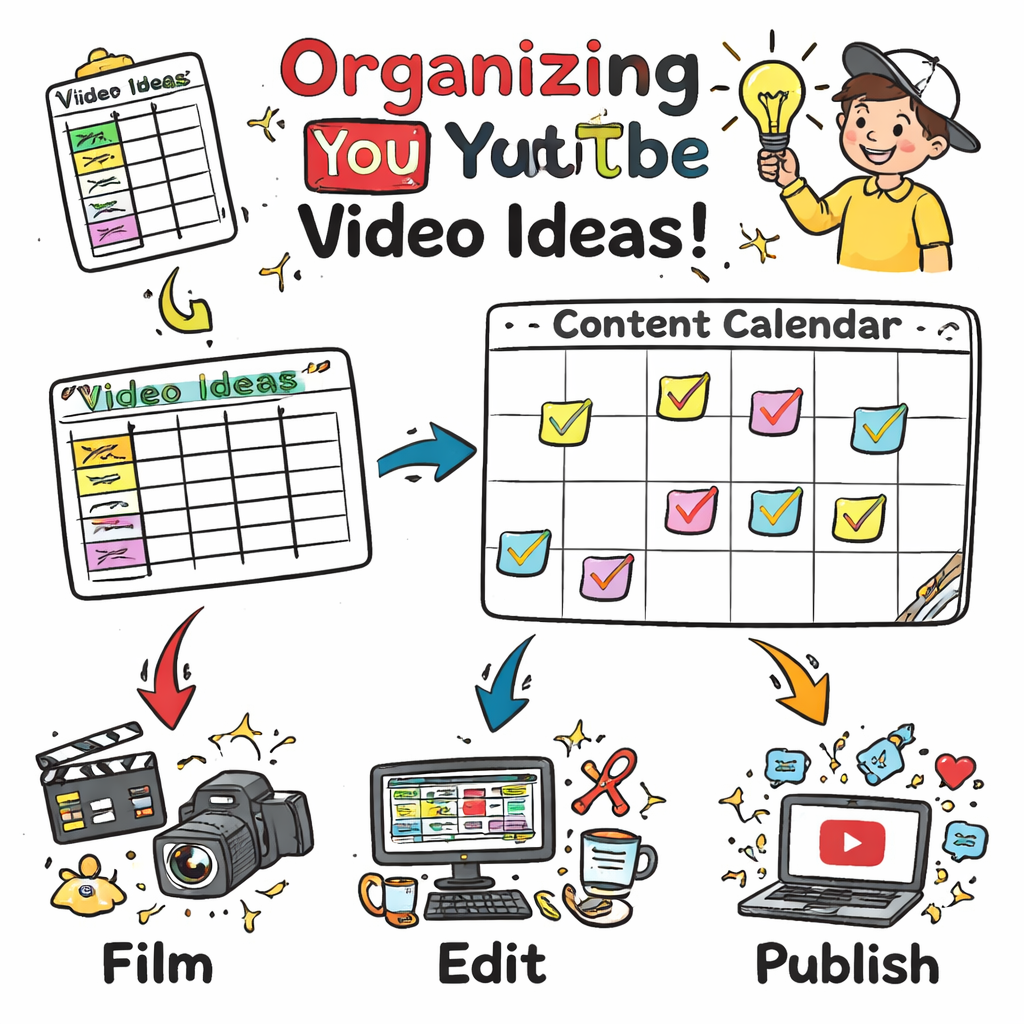
First, create a master spreadsheet. Columns should include “Idea,” “Keyword,” “Trend Score,” “Production Effort,” and “Publish Date.” Fill each row with the ideas you gathered from steps 1‑3.
Next, give each idea a priority score. Add points for search volume, trend urgency, and personal excitement. For example, an idea with 30k searches, a fresh trend, and high excitement gets 9 out of 10.
Now, map the ideas onto a calendar. Use a free Google Calendar and block out filming days, editing days, and publish dates. Stick to a consistent rhythm , for many creators, two videos per week works well.
Here’s a quick template you can copy:
| Date | Idea | Keyword | Effort | Status |
|------|------|---------|--------|--------|
| Mon | 30‑min vegan breakfast | vegan breakfast ideas | Low | Filming |
| Thu | How to batch‑cook vegan lunches | batch vegan meals | Medium | Editing |
Why schedule? Because the algorithm favors regular uploads. When you have a plan, you’re less likely to miss a week.
Use the free YouTube Studio Search Insights to see when your audience is most active. Schedule uploads for those peak times.
Our pick, the SaaS platform for YouTube video ideas, lets you drag and drop ideas right into a calendar view. It even sends you reminders so you never skip a slot.
And if you want a visual cue, create a Kanban board with three columns: “Ideas,” “In Production,” and “Ready to Publish.” Move cards as you progress.
Actionable checklist:
When you look back after a month, you’ll see a clear pattern of what works and what doesn’t. Adjust the scoring system accordingly.
Conclusion
There you have it , a full, free system to keep your youtube video ideas free pipeline humming. We started with passion, added keyword research, rode trends, and locked everything in a schedule. Follow these steps week after week and you’ll stop guessing and start creating videos that draw views.
Remember, the biggest shortcut is using a tool that ties everything together. Our pick, the SaaS platform for YouTube video ideas, does exactly that , it gives you unlimited AI‑driven suggestions, lets you save and tag ideas, and even shows competitor moves. Try it risk‑free and see the difference.
Now go fire up your camera, hit record, and watch the views climb.
FAQ
Can I really find good youtube video ideas free without paying for a tool?
Yes. By mixing your own passion list with free keyword generators like Keyword Tool and free trend sources, you can build a solid idea bank. The key is to do the research consistently and log each find in a spreadsheet. Over time the list grows without any cost.
How many keyword ideas should I aim for each week?
We suggest at least 10 fresh keyword ideas per week. That gives you enough material for a two‑video‑per‑week schedule while leaving room for trend‑driven content. Use the free tools to batch generate them on Monday, then filter down by relevance.
Do free tools give accurate search volume numbers?
Free tools often show estimates, not exact counts. They’re still useful for spotting high‑interest topics. Pair the estimate with the YouTube view counts you see on the search results page , if the top videos have strong numbers, the keyword is likely solid.
What if my niche is very narrow? Will free tools still help?
Even narrow niches benefit from long‑tail keywords. The free AI clustering in Keywordly.ai shines here, grouping very specific phrases that larger tools miss. Combine those with community feedback from comments to flesh out the idea.
How often should I update my idea spreadsheet?
Update it at least once a week. Add new trends, remove stale ideas, and re‑score the remaining items. A weekly refresh keeps the list fresh and aligns with YouTube’s fast‑moving algorithm.
Is it worth using the free version of vidIQ for trend alerts?
Absolutely. The free tier gives you email alerts when a competitor’s video spikes. Those alerts can spark a timely response video, which often rides the same wave of interest and pulls in extra views.
Can I schedule videos directly from a spreadsheet?
Not directly, but you can copy the publish dates from your sheet into YouTube Studio’s scheduling feature. Some free calendar apps also let you export events as CSV, which you can then import into YouTube if you use a bulk‑upload workflow.
What’s the biggest mistake new creators make when brainstorming ideas?
They chase vanity metrics instead of solving a viewer’s problem. Focus on what your audience asks for, use real search data, and keep your own excitement high. That combo fuels both relevance and consistency.
- Build the master spreadsheet within 30 minutes.
- Score each idea on a 1‑10 scale.
- Populate a two‑week calendar with the top‑scoring ideas.
- Set reminders for each production step.