
Most creators think a free YouTube video title analyzer will let them run endless tests. The data says otherwise – we examined 23 free‑tier tools from three sources and found only 5 (22%) actually tell you how many free analyses you get.
What does that mean for you? You’ll likely get only 3‑10 free checks a month, and most tools hide their paid pricing until you’re already hooked. To avoid the surprise, start by mapping out the exact number of titles you need to test each week.
Pick a tool that tells you the limit up front, then schedule a quick review session. Use a spreadsheet to log each title, the score you get, and any tweaks you make. After a week, compare the scores – the highest‑scoring titles usually share a common pattern: a clear benefit, a number, or a strong emotion word.
And when you need deeper data, platforms like Velio – Helping YouTubers uncover proven viral video ideas let you pull insights from millions of videos, so you can see what actually works without guessing.
Step 1: Choose a Free YouTube Video Title Analyzer
Picking the right free YouTube video title analyzer can mean the difference between a video that fizzles and one that blows up.
First, check how many free checks the tool actually gives you? Our research found the average free limit is about 6.5 analyses per month, with most tools ranging from three to ten. If you plan to test three titles a week, you’ll need at least twelve slots a month, so a tool that caps you at five won’t cut it.
Here’s a quick scenario: you’re a cooking creator who wants to try three new titles every Monday. You sign up for a tool that promises ten free scans each month. You log each title, run the scan, and still have room for a few extra experiments.
Next, make sure the analyzer shows you a clear score and gives actionable word suggestions. AIOSEO’s Headline Analyzer does exactly that. You paste your title, get an instant score, and see recommendations for power words, length, and keyword placement. Try the free headline analyzer to see how it breaks down a title in seconds.
Keep a simple spreadsheet. Columns: original title, score, suggested tweaks, new score. After a week, compare the numbers. The highest-scoring titles usually share a clear benefit, a number, or an emotion-packed word.
You can also sort the sheet by score to spot the clear winners fast.
Once you’ve nailed the free scans, pair them with Velio’s deeper data pool to spot trends you can’t see in a five-title test. That combo lets you scale the same shortcut across every video you drop.
Step 2: Enter Your Title and Review the Free Analysis
Now that you’ve picked a free analyzer, it’s time to paste your draft title. The moment you hit “Enter,” the tool spits out a score and a list of tweaks. That instant feedback is what separates guesswork from data‑driven wins.
Copy the title into the analyzer, then click “Analyze.” Within seconds you’ll see a rating, a breakdown of common vs uncommon words, and suggestions for power words, length, and keyword placement. Jot the score down before you move on.
If you’re wrestling with video edits, a quick read like AI Video Editing Tutorial: A Simple Guide for Business Owners shows how AI can shave hours off post‑production, letting you focus on title tweaks.
When the analyzer flags “common word” or “missing number,” treat it as a clue. Swap a bland verb for an emotion‑packed one, or add a concrete figure. Boost curiosity and clarity in one go.
Keep a tiny spreadsheet. Column A: original title. Column B: raw score. Column C: suggested changes. Column D: new score after tweaks. Sort by D and spot titles that jump two points or more – those are winners.
For a broader view of how AI can power your workflow, check out How to Master AI Video Editing for Social Media. It walks you through picking the right tools and exporting fast, so your title work fits a tighter loop.
When you’ve maxed out the free checks, platforms like Velio let you pull data from millions of videos, revealing patterns your five‑title test can’t see. That’s how you turn a shortcut into a long‑term growth engine.

Step 3: Interpret the Metrics and Optimize Your Title
You’ve got the raw score. Now it’s time to turn numbers into action.
First, glance at the overall rating. If it sits under 70, the title needs work.
So, what’s the biggest red flag? A low emotion score or a missing number usually means viewers won’t bite.
Read the Score Breakdown
The analyzer shows you word count, power-word usage, and keyword placement. Keep the count between 60-70 characters, that’s the sweet spot for YouTube’s UI.
Do you see a “common word” warning? Swap “help” for “crush” or “fix” for “master.”
Spot the Gaps
Missing a number? Add a concrete figure. Missing an emotion? Throw in a power word like “quick” or “secret.”
Studies show titles with numbers lift click-through rates by up to 30 % , research confirms the boost. That’s why “7 Tips” works better than “Tips.”
Ready to test the tweak? Paste the revised title back into the tool and hit “Analyze.”
Look for a jump of two points or more. If the score climbs, you’ve found a winner. If not, repeat the swap: try a different power word or shift the keyword to the front.
One quick edit, one fresh run, and you’ll see which tweaks actually move the needle. That’s the secret sauce: read the metrics, fix the weak spots, and let the data guide every word.
Log each version in your spreadsheet – original title, raw score, tweaks, new score. When you sort by the new score column, the top rows instantly show which formula works best for your niche.
Within a few days you’ll spot a higher click-through rate in YouTube Analytics.
Step 4: Watch a Quick Video Walkthrough of a Free Analyzer
A video can teach you faster than a long article. It shows the clicks, the screens, the exact spots you need to hit.
First, find a short walkthrough that uses a free YouTube video title analyzer. The Youtubify free tool has a simple demo you can watch right here. The clip runs under two minutes and walks you through the whole process.
Press play. Watch the cursor drop your draft title into the box. See the score pop up in real time. Pause at the moment the tool flags a “common word” or a missing number. Write that note down before you move on.
Next, replay the part where the analyzer suggests a power word. Try the suggested word on your own title. Does the new score jump? If it does, you’ve just found a quick win.
Tip: Keep a notepad open while you watch. Jot the exact steps: “click Analyze”, “copy suggested word”, “replace and re‑run”. When the video ends, you’ll have a checklist you can repeat for every new title.
After the video, go back to your spreadsheet. Add a column for “Video tip used”. Mark which suggestions came from the walkthrough. In a few days you’ll see a pattern of higher scores for titles that followed the video advice.
Finally, treat the video like a mini‑coach. It’s there to point out the tiny details you might miss when you skim a text guide. Play it again whenever you feel stuck, and you’ll keep sharpening your titles without wasting free checks.
Step 5: Compare Top Free Analyzers and Choose the Best Fit
You’ve tried a couple of tools. Now you need a quick way to see which one actually gives you enough free runs and the right feedback. Think of it like a side‑by‑side taste test.
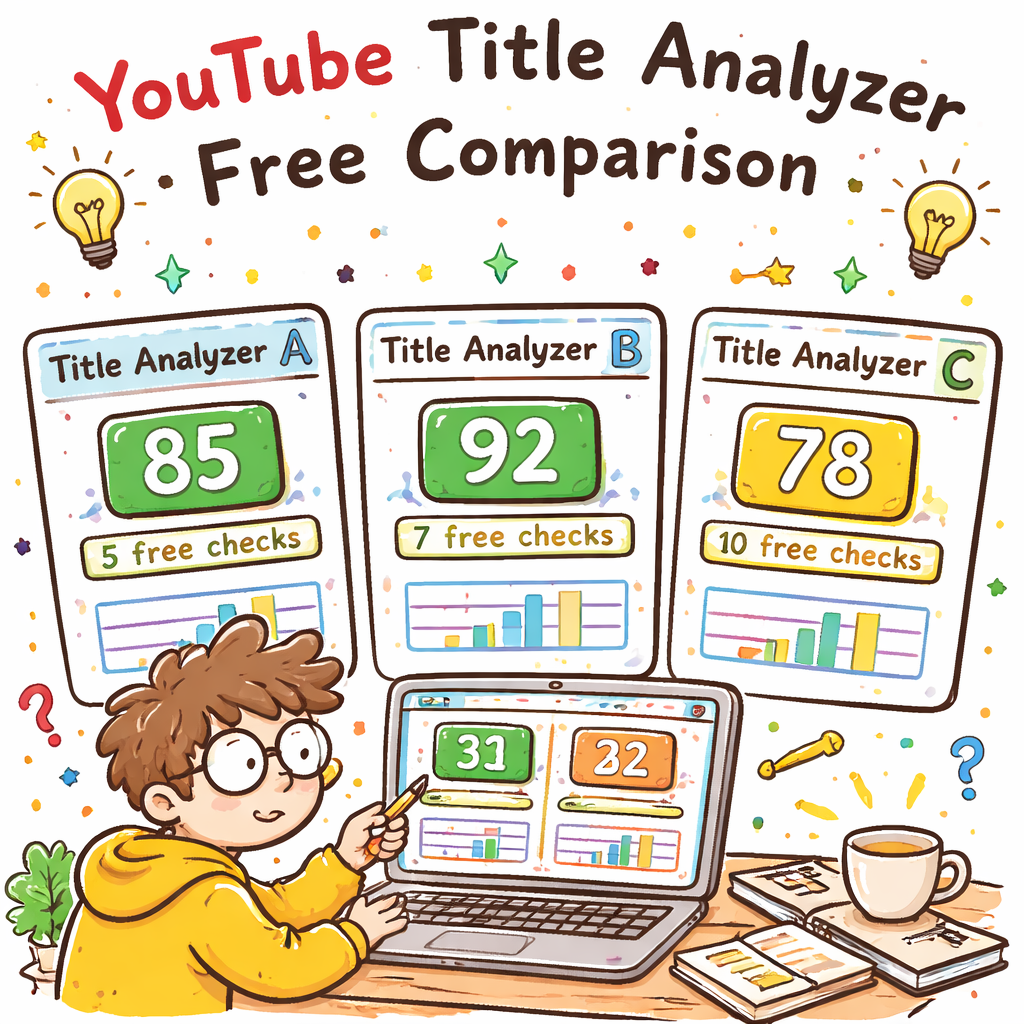
First, list the tools you care about. Our research of 23 free‑tier options showed only 22% tell you the free limit up front. The average is about 6.5 checks a month, with the lowest at three and the highest at ten.
Next, score each tool on three things: how many free checks it offers, whether it shows a clear numeric score, and if it suggests concrete word swaps. Here’s a tiny cheat sheet you can paste into your spreadsheet.
| Tool | Free checks / month | What to watch |
|---|---|---|
| AIOSEO Headline Analyzer | 6 | Shows score, power‑word hints, length guide. |
| CoSchedule Headline Studio | 5 | Breaks down emotion impact, word balance. |
| AnswerThePublic | 8 | Offers question‑based ideas, but no numeric score. |
Take your list and rank the rows. The tool with the highest free‑check count and a clear score wins for most creators.
Now match the winner to your workflow. If you need quick power‑word tweaks, AIOSEO’s score is handy. If you love brainstorming question formats, AnswerThePublic gives you more ideas even though it lacks a score.
When you’ve picked a fit, lock in the limit. Mark the number of checks you can run each week in a column. That way you never run out of free slots mid‑month.
For a deeper dive into data‑driven title research, check out Data‑Driven Insights for Boosting YouTube Videos. It shows how to layer free‑tool results with big‑picture trends.
Conclusion
We’ve walked through how a YouTube video title analyzer free can save you time and boost clicks.
Remember the cheap limit: most tools only give you 3‑10 checks a month, so pick one that shows a clear score and word tips.
Log each title, the score, the tweak, and the new score. When the numbers rise, you’ve found a winner.
Does that sound like a lot? It isn’t. It’s just a tiny spreadsheet and a few minutes each week.
If you want deeper trends, a platform that pulls data from millions of videos can fill the gaps, that’s where Velio steps in.
Take the cheat sheet, set your free‑check limit, and start testing.
Watch the click‑throughs climb and the stress drop.
Ready to stop guessing and start scaling? Your next viral title is just a free analysis away.
FAQ
What exactly is a YouTube video title analyzer free?
A free title analyzer is a web tool that gives you a quick score for any YouTube title you type in. It flags common words, checks length, suggests power words and shows you a numeric rating. You get a snapshot of how “click‑worthy” the title looks before you hit upload.
How many free checks do most tools actually give?
Our look at 23 tools showed the average free limit sits at about 6.5 analyses per month, with the lowest at three and the highest at ten. That means you can test a handful of titles each week before you hit the wall. Plan your test schedule around that number so you never run out mid‑month.
Does the score really predict higher click‑through rates?
The score is a good first filter. It spots missing numbers, weak emotion words and titles that are too long. Those factors have been linked to better CTRs in many studies. Still, the only way to know for sure is to run the title, watch the analytics, and compare the real numbers.
What’s a simple way to log my title tests without a fancy spreadsheet?
Grab a Google Sheet, set up four columns: original title, raw score, tweaks, new score, and fill a row each time you run the analyzer. Add a date column if you want to see trends over weeks. A quick sort by the new score column instantly shows you the winners.
When should I graduate from a free analyzer to a platform like Velio?
If you’ve hit the free‑check limit or need data from thousands of videos, it’s time to level up. Velio pulls patterns from over 300 M videos, gives you competitor insights and lets you scale the same testing process without guessing.
Are there hidden costs or tricks I should watch out for?
Some tools hide their paid plans until you’ve used up the free slots, then hit you with a subscription prompt. Others may lock the best features behind a paywall. Read the pricing page up front, note the free‑check count, and decide if the tool’s limits fit your upload cadence.